

In short
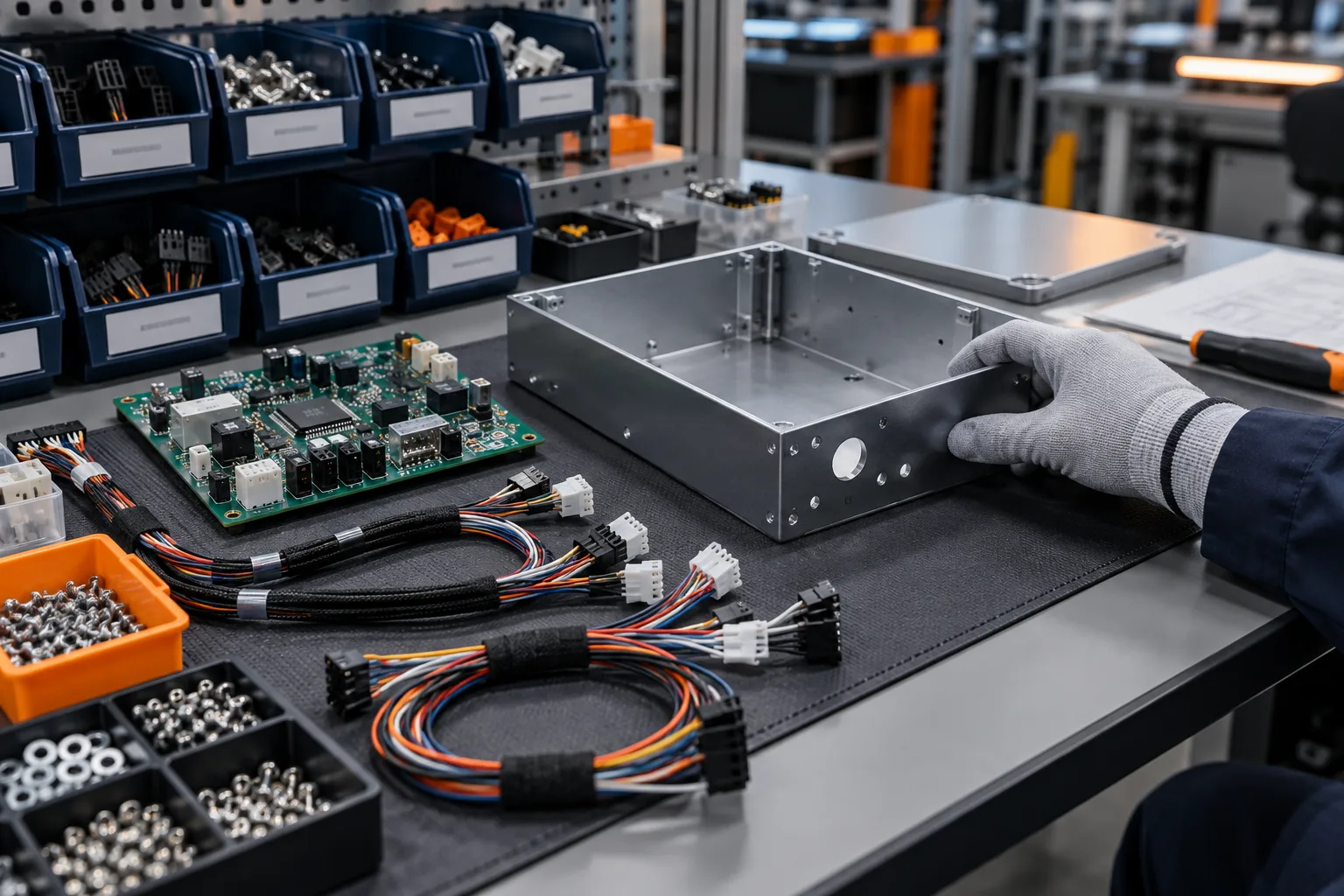
A box-build assembly package should describe the finished unit from board to shipment. Gather the PCBA and mechanical revisions, harness drawings, connectors, fastening and thermal details, firmware or programming instructions, test conditions, labels and packaging. Review the interfaces together before the pilot build so the assembly team can plan an executable route.
Box-build assembly begins where board-only assembly ends: the electronics must fit, connect, operate and ship as a finished unit. A useful checklist starts with the PCBA and enclosure drawings, then follows every interface through wiring, configuration, test and packaging. Keeping those inputs together makes the quotation and pilot build more useful.
PCBArise can discuss box build as a coordinated route for PCBA, cable/harness, mechanical integration, programming, functional testing and final packaging. The exact scope is confirmed from the released project material. Start with box build assembly, then use this checklist to turn the available files into questions that can be resolved during a project review.
What a box-build package needs to contain
The package tells the team what the unit is, which revision is approved, how pieces connect, how the delivered product is configured and what evidence is needed to release it. It also separates known inputs from decisions still waiting for confirmation. That distinction matters to an NPI manager: an incomplete item is not automatically an error, but it must have an owner and a decision point before it affects a pilot or repeat build.
Box-build inputs and who supplies them
| Release area | Typical input | Who must confirm it | Evidence or output to agree |
|---|---|---|---|
| PCB and PCBA | Fabrication data, BOM, placement data, assembly drawing and revision | Customer/design owner confirms released data; project team confirms review questions | Controlled build package and agreed revision list |
| Mechanical integration | Enclosure drawing or model, mounting, fasteners, thermal interfaces and label location | Customer/design owner confirms fit and requirements; project team confirms build-route interpretation | Agreed integration instructions or open-item list |
| Wiring and harness | Harness drawing, pinout, connector references, routing and strain-relief requirements | Customer/design owner confirms electrical/mechanical definition; project team confirms manufacturability questions | Controlled connection instruction and any agreed verification method |
| Configuration | Firmware revision, programming method, variants and allowed changes | Customer/design owner confirms approved state; project team confirms required access and sequence | Agreed configuration check or record where required |
| Verification | Inspection points, test procedure, fixture, conditions, limits and failure handling | Customer/design owner confirms acceptance conditions; project team confirms execution route | Specified pass/fail result and disposition path |
| Pack-out | Accessories, labels, protection, carton and shipping instructions | Customer/design owner confirms delivered condition; project team confirms feasibility and scope | Agreed final-release and pack-out check |
This is not a promise that each item is included on every order. It is a way to expose what is supplied, pending or to be agreed. Altium's box-build overview makes the same practical distinction: usual PCB data does not communicate the rest of the mechanical, mounting, cable and harness requirement.
Release package checklist
1. Electronic build data
- Released fabrication files, BOM, placement data, assembly drawing and revision history.
- Approved alternates or sourcing constraints when component sourcing is part of the discussion.
- Relevant PCB test access, programming pads or interface notes.
2. Mechanical and wiring data
- Current enclosure drawing or model, mounting position, hardware and label-placement data.
- Harness and cable drawing with connector identifiers, pinout, wire callouts and routing notes.
- Defined constraints such as access, keep-outs, thermal interfaces, seals or serviceability where relevant.
3. Firmware, configuration and test
- Approved firmware or configuration revision, programming instructions and variant rules.
- Test setup, required fixture or customer-supplied equipment, conditions, pass/fail limits and fault handling.
- Acceptance requirements and the specific inspection, test, configuration or serialisation record required for the project.
4. Labels, accessories and packaging
- Label artwork and placement, accessory list, user material, protective packaging and shipping instructions.
- Required final appearance, count, barcode or documentation check.
- Clear ownership for changes, substitutions and any release exception.
Use the handoff flow before pilot production
A good handoff starts with the customer-supplied release set, makes gaps visible during engineering review, then captures the agreed build route before the line is committed. Only after those decisions are agreed can a verification record or final pack-out check be interpreted consistently. This approach keeps a later test result tied to the configuration that was actually built.
Printable box-build assembly checklist
- □ One current revision list covers PCBA, enclosure, harness, labels and firmware/configuration.
- □ The intended deliverable and included accessories are named.
- □ Mechanical fit, mounting and interface data are available or assigned as open engineering questions.
- □ Wiring pinout, connector identity, routing and strain-relief requirements are available or assigned.
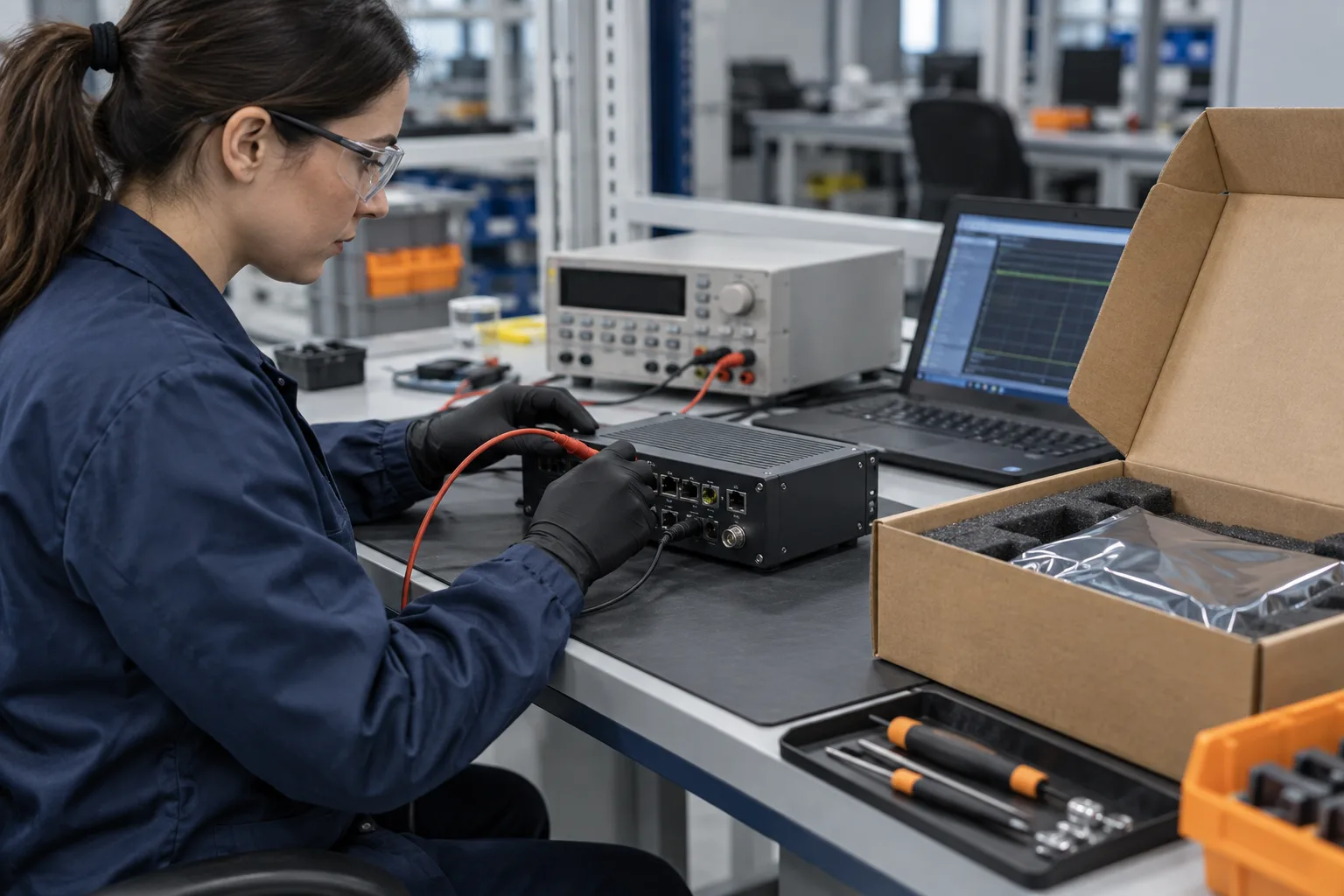
- □ Test conditions, pass/fail limits, equipment and required records are defined where testing is in scope.
- □ The applicable customer requirements, document revisions and acceptance notes are listed.
- □ Pack-out, labels and shipping condition are defined for the delivered product.
- □ A change, deviation and final-release contact is identified for the project.
Print this article with the button above, or use the browser's Print to PDF option, as a meeting checklist. It is a planning aid: the released project package and agreed route remain the controlling source.
Questions to resolve before requesting a box-build quote
State the quantity and stage—prototype, pilot or repeat production—then identify what material is supplied, what may be sourced, what must be configured and what evidence is needed at release. Connect the discussion to component sourcing if ownership of BOM items is open, and to PCB assembly testing if electrical or functional evidence needs a project-specific plan. This gives the team enough context to discuss a build route without implying fixed scope, lead time or test coverage.
Next step: bring the files and the open decisions
Send the current PCBA package plus the mechanical, wiring, configuration, test and packaging inputs that already exist. PCBArise can review the available materials to discuss a coordinated manufacturing path. Where an input is still open, capture it as a project question before the final scope, records and release path are agreed.
FAQ
Common questions
What files are needed for a box-build assembly quote?+
Start with released PCBA data, BOM, assembly information, mechanical drawings or models, wiring/harness data, configuration instructions, test requirements, labels and packaging needs. The exact required package depends on the intended project scope.
Is a Gerber file and BOM enough for box build?+
They can describe the board, but they do not define enclosure fit, wiring, firmware, final test, labels or pack-out. Add the relevant system-level information or identify each open item for engineering review.
Who owns box-build test requirements?+
The product owner should define the required behavior, conditions and acceptance limits; the manufacturing route and execution details are then confirmed for the released project. Do not assume a test type or record is included without agreement.
What should be linked to a unit or lot record?+
Only the configuration, inspection, test, material or pack-out data required by the released quality plan. The record design should identify the project revision and the evidence that supports the final release.
What should an open-item list contain before a box-build quote?+
For each missing item, record the part or assembly affected, the decision owner, the latest drawing or file revision, the proposed assumption and the date it must be resolved. Prioritize enclosure fit, harness pinout, firmware version and final-test limits because an undefined answer in any of those areas can change the quoted work.
Technical references
Sources used for this guide
These sources explain the standards, materials or process details discussed above. Check the current revision when applying them to a new design.