Approved manufacturer part
Use the specified manufacturer and part number where electrical, mechanical or qualification requirements do not allow substitution.
Component sourcing services turn a design BOM into an approved, traceable material plan that can support the intended PCB assembly route.

Electronic component sourcing for PCBA turns a design BOM into a purchase-ready material plan. It covers part identity, manufacturer and lifecycle review, approved alternates, packaging, receiving checks and the traceability evidence agreed for the order.
Price and stock are only two fields in the decision. Manufacturer identity, lifecycle, packaging, moisture sensitivity, traceability and substitution authority all affect build risk.
Use the specified manufacturer and part number where electrical, mechanical or qualification requirements do not allow substitution.
Document acceptable alternatives and the approval rule before committing material to the build.
Receive controlled or scarce parts with quantity, condition, date/lot and traceability expectations defined.
Flag obsolete, allocation-sensitive or long-lead items early enough to support a design or purchasing decision.
A procurement-ready BOM identifies the part, approval boundary and evidence required at receiving.
Use this as a BOM-control checklist; channel, alternate and traceability commitments remain order-specific.
| Core part data | Reference designator, quantity, manufacturer, manufacturer part number and description |
|---|---|
| Package data | Package, value, tolerance, voltage or other attributes needed to disambiguate the item |
| Source rule | Exact part, approved alternate, customer approval required or customer supplied |
| Lifecycle review | Availability, lifecycle and risk observations recorded at quotation and rechecked before commitment |
| Packaging condition | Reel, tray, tube, cut tape or other form assessed against setup and handling needs |
| Moisture handling | MSL and exposure controls considered where relevant to the supplied device |
| Incoming verification | Label, quantity, package, condition and agreed identity checks performed against purchase data |
| Traceability record | Source and lot/date evidence retained to the level agreed for the order |
Generic values such as “10 kΩ resistor” can describe many electrically or mechanically different parts. Manufacturer part numbers and an explicit alternate policy keep purchasing decisions connected to the design intent.
AI-generated illustrationThe material plan should make technical authority and commercial risk visible before purchase.
Use it when the assembly depends on more than placing a purchase order against a raw BOM.
Coordinate material availability and approvals with the board and assembly schedule.
Evaluate alternates without silently changing the released design intent.
Maintain a controlled source and revision history for recurring builds.
Quality documents
The published ISO records name Zhongshan Wenquan Electronic Manufacturing Co., Ltd. and its Zhongshan PCBA facility. They do not certify every PCBArise facility, service or product.
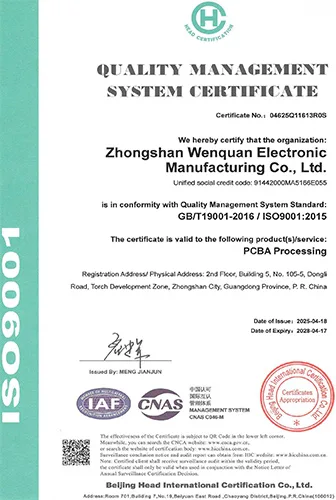
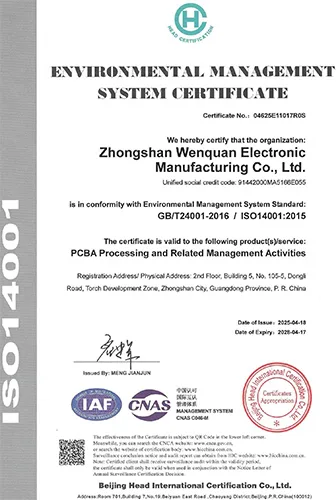
These are management-system certificates, not product or batch COAs. No batch inspection reports or COAs are currently published here.
Use these sourcing answers to clarify BOM authority, alternate approval, consigned material and receiving evidence before purchase.
The sourcing plan identifies the approved channel for each order. Distributor or supplier names alone do not replace part identity, condition and traceability checks.
No. Alternatives follow the approval rule agreed for the BOM. Form, fit, function, lifecycle and qualification implications are reviewed before use.
Yes. Quantity, packaging, condition, traceability and shortage responsibility should be agreed before the material is shipped.
The receiving plan can include label, quantity, package, condition and identity checks appropriate to the order. Any deeper inspection requirement must be defined during review.
Move from component decisions to turnkey delivery, prototype builds, capability review and SMT process planning through the existing Assembly pages.
Share the current BOM, manufacturer part numbers, alternate policy, target build and traceability requirements for a sourcing review.