

In short
IPC-A-630A addresses acceptance of a complete electronic box assembly—not only the populated PCB. For a box-build project, identify the applicable document revision and class, then connect the enclosure, wiring, PCBA, configuration, labeling and final test to the product drawings. This guide helps organize that handoff and shows which decisions belong in the project package.
An electronic box build brings a PCBA, harnesses, enclosure, hardware and configuration together as one deliverable. IPC-A-630A provides acceptance language for that complete assembly. The useful starting point is to define the finished unit and its interfaces, then identify which drawing, class and test conditions apply to the project.
For a project route that joins PCBA, cabling, mechanical integration, programming, test and packing, start with box build assembly. Connect the system-level decisions to quality control and PCB assembly testing rather than treating the final enclosure as a separate afterthought.
Where IPC-A-630A fits in box-build assembly
The official release describes electronic box assemblies as final system, top-level or higher-level assemblies, functional units, drawers, cabinets, line-replaceable units and housings. It also describes acceptance context from enclosure fabrication and installation through cable/harness integration, interconnection, marking, labeling and final testing. This helps teams separate the question did the PCBA meet its board-level requirements? from does the completed unit meet the agreed system-level acceptance conditions?
The release describes Class 1, 2 and 3 acceptance categories. A customer or design authority must name the applicable class and document revision when those requirements are intended to apply. Referencing a standard in a conversation does not automatically make it contractual, nor does it establish a final product approval. Use the released drawing package and purchase requirements to confirm applicability.
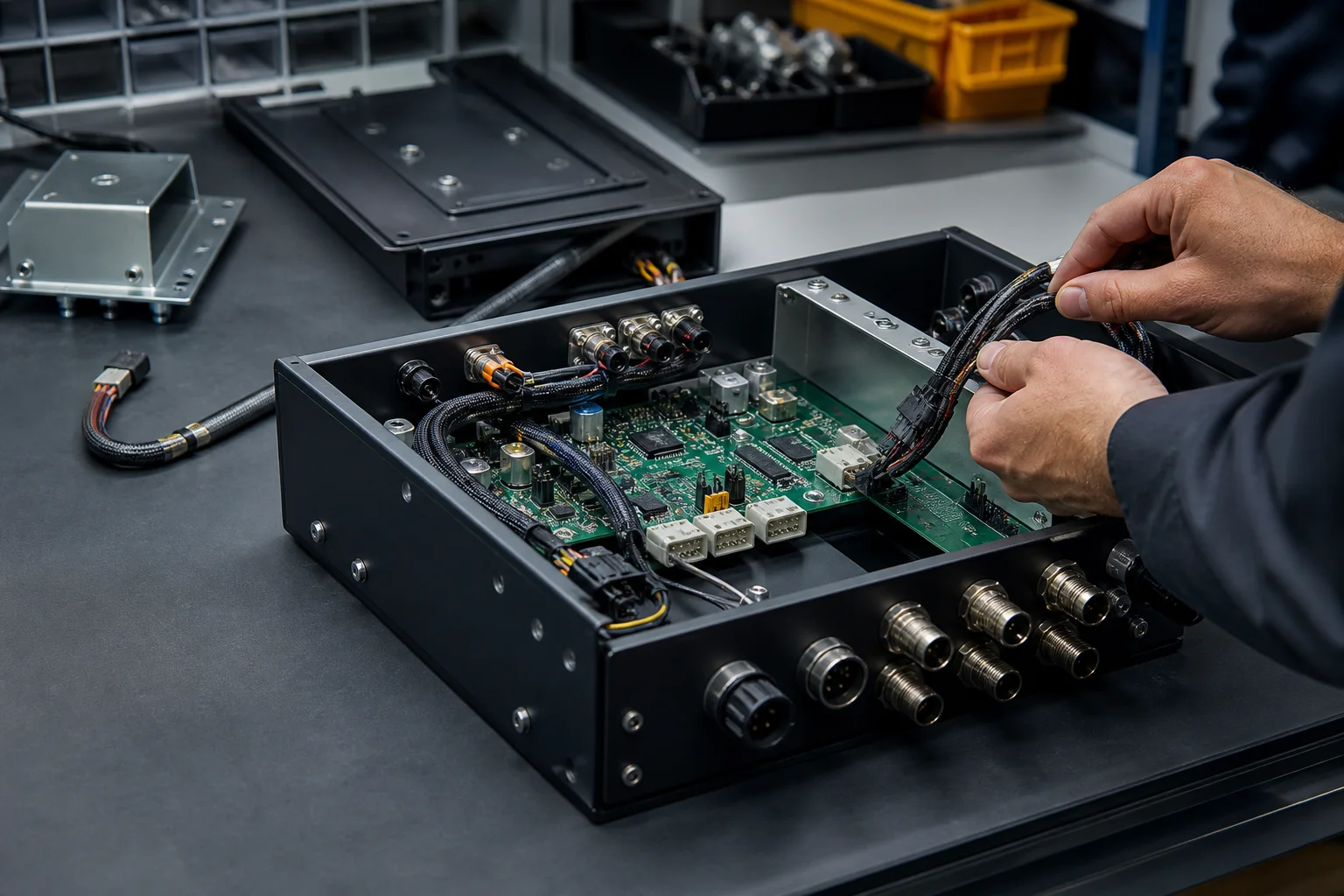
PCBA acceptance and box-build acceptance are connected, not interchangeable
| Decision area | Question the project must answer | Useful evidence | Boundary to keep clear |
|---|---|---|---|
| PCBA condition | What workmanship, inspection and electrical conditions apply to the populated board? | Agreed inspection or test result for the selected board-level gate | A passing board result does not prove mechanical fit or final system behavior. |
| Harness and interconnection | Which cable, connector, pinout, routing and strain-relief requirements are released? | Controlled drawing, approved material callout and any agreed verification record | Do not infer harness requirements from the board BOM alone. |
| Mechanical integration | How are enclosure, hardware, thermal interfaces, labels and access features defined? | Assembly drawing, revision-controlled mechanical data and acceptance notes | Fit, fastening and cosmetic criteria are project inputs, not automatic defaults. |
| Configuration and final test | Which firmware, setup, fixture, conditions and pass/fail limits define the delivered unit? | Approved revision plus the agreed test result and disposition path | Functional testing is only meaningful against a defined setup and requirement. |
| Release record | What needs to be delivered or retained for the specified unit or lot? | Project-defined configuration, test, inspection or pack-out records | Do not promise a record type until the project scope confirms it. |
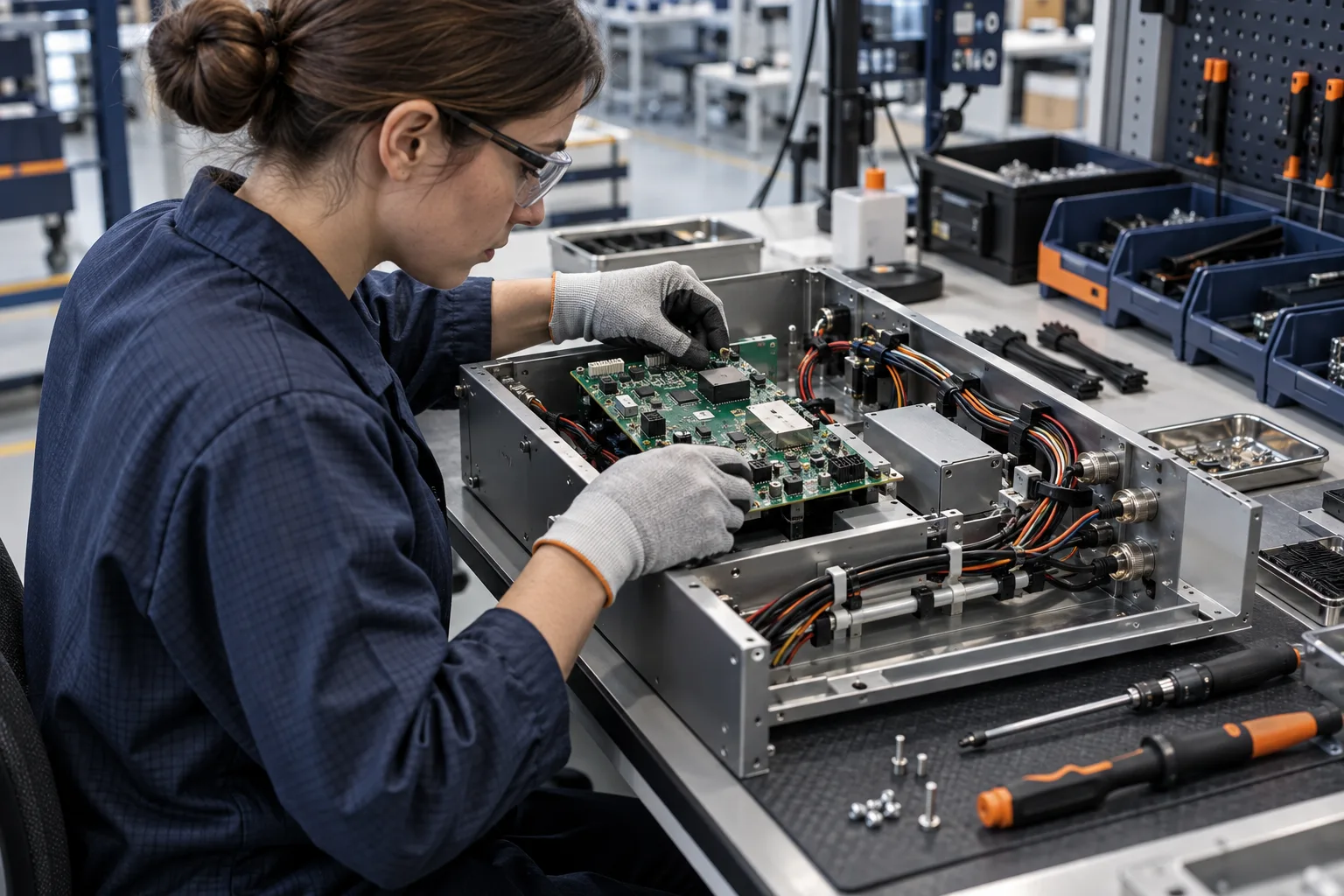
Five inputs for a build-ready box-build package
1. Define the deliverable and its revision
State what the buyer expects to receive: a subassembly, a configured enclosure, a final unit, or a packaged unit with specified accessories. Tie the requirement to a controlled revision of the PCBA, enclosure, harness, labels and configuration data. A revision list helps avoid building a mechanically correct unit around an outdated board or firmware state.
2. Name the acceptance language that actually applies
Record the customer requirements, drawing notes, applicable document revision and product class where specified. The Global Electronics Association's published checklist notes that references are not invoked unless they are specifically stated. That is a useful control: standards can organize the discussion, but the released project package determines what is called out for the build.
3. Map interfaces before the line is set up
Review mounting points, connector access, harness length and routing, thermal interfaces, fasteners, labels, programming ports and final test access together. These interfaces are where an otherwise acceptable PCBA can fail to become an acceptable system. A clear issue list is more useful than an unsupported promise that all integration risks have been removed.
4. Specify checks at each assembly stage
Ask what evidence the project needs at incoming material, PCBA, integration, configuration, functional test and shipment release. The answer may be a visual inspection, a measured result, a program revision check, a serial-number link or a customer-defined record. The required level is set by the released build package and the agreed quality plan.
5. Agree the deviation and release route
A pilot can reveal an open mechanical or test question. Before production, identify who can disposition a discrepancy, what evidence supports that decision and how the affected revision is controlled. This keeps a production traveler from becoming an informal engineering-change channel.

Questions to place in the project acceptance package
- What is the exact finished deliverable, quantity, product revision and included accessory set?
- Which drawings, acceptance notes, class and document revision apply to this build?
- Which parts of the PCBA, harness, mechanics, programming and final test are in the agreed scope?
- Which conditions need objective inspection or test evidence, and which conditions are verified against the released drawing?
- Which record must be associated with the unit or lot, if any?
- Who approves an open item, rework, substitution or release deviation?
These are good inputs for a project-specific review. PCBArise can discuss fabrication, assembly, sourcing, inspection and documentation pathways around released files; the final process, records and acceptance route are confirmed for the actual build package.
How to use the standard responsibly
Use IPC-A-630A to sharpen the contract and engineering conversation—not to copy licensed requirements into a supplier brief or to make a blanket compliance claim. The official release says the standard supports objective, class-coded criteria for training, inspection, process control and customer alignment. For a project, that means confirming the current applicable document, customer conditions, drawings, test limits and documentation requirements before release. It does not replace product qualification, customer approval or any separate regulatory obligation.
Turn box-build requirements into a production route
If you are moving from a board-level release to a finished electronic unit, gather the PCBA files, BOM, enclosure data, harness information, configuration instructions and acceptance requirements in one package. Review the available PCB assembly pathway, the published certification records and the quality pages, then submit the released material for an engineering discussion that is specific to your product.
FAQ
Common questions
What is IPC-A-630A?+
IPC-A-630A is the Global Electronics Association's 2026 acceptance-standard update for electronic box assemblies. The official release describes class-coded acceptance context for complete electronic systems, including enclosure, cable/harness, marking, labeling and final-test areas.
Does IPC-A-630A replace PCBA inspection requirements?+
No. Board-level workmanship and inspection requirements remain distinct from complete-system acceptance. A project should connect the two through its released drawings, applicable requirements and agreed evidence plan.
Does citing IPC-A-630A mean a supplier is automatically compliant?+
No. A standard reference must be made applicable in the project requirements, with the current revision, class and acceptance evidence identified. A citation alone is not a contract term or product approval.
What records should a box-build project request?+
Start with the as-built configuration and revision, wiring or torque checks where applicable, programmed firmware version, inspection results, functional-test result with limits, unit or lot identifier, label verification and pack-out check. Keep each record tied to the unit or lot it describes; remove a category only when it is genuinely outside the product and agreed acceptance scope.
Which documents define acceptance of the finished box build?+
Use the enclosure and harness drawings, approved PCBA revision, wiring and torque instructions, firmware/configuration list, label artwork, inspection and functional-test limits, and packaging specification. Name the applicable acceptance standard and revision in the order rather than assuming a PCB-only standard covers the finished unit.
Technical references
Sources used for this guide
These sources explain the standards, materials or process details discussed above. Check the current revision when applying them to a new design.