
In short
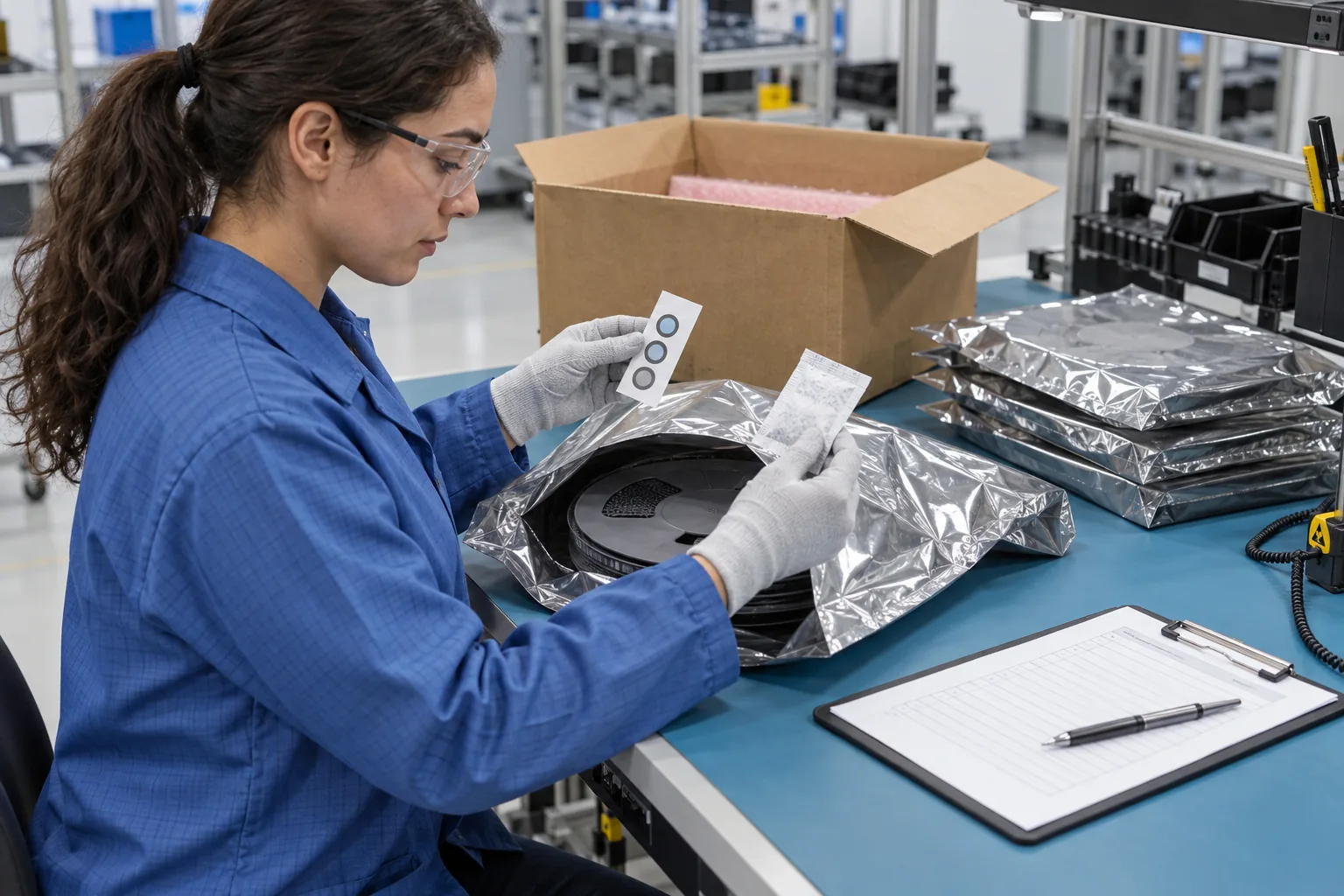
Treat MSL as a reflow-damage classification, not a general storage or ESD grade. At receipt, match the manufacturer label, part and lot identity, bag seal, humidity indicator and desiccant. Once opened, record cumulative exposure through kitting, setup and line stops. Repacking pauses or controls exposure only under a defined method; it does not automatically restore floor life.
- Use the exact component label and manufacturer data to identify MSL, peak reflow classification and handling instructions.
- Start one cumulative exposure record when the moisture-barrier bag is opened and carry it through every material handoff.
- A sealed bag, dry cabinet or store-room return does not automatically reset consumed floor life.
- Quarantine uncertain material before reflow; choose drying or baking only from the applicable device and packaging instructions.
Control moisture-sensitive parts by their exact label and cumulative time out of the approved dry environment. At receipt, verify part and lot identity, manufacturer moisture label, bag seal, humidity card, desiccant and traceability. At opening, record time and conditions; continue the same record through kitting, feeder setup, stops and returns. If identity, exposure or package condition is uncertain, hold the material before reflow and use the applicable component instructions to select the next action.
What do MSL, floor life and moisture exposure actually mean?
MSL classifies a nonhermetic device package's sensitivity to moisture-induced damage during reflow; floor life is the allowed cumulative exposure under the classification conditions after dry-pack opening or an accepted dry state. Moisture can diffuse into permeable package materials. Rapid heating during reflow can then contribute to internal delamination, cracking or other package damage. The rating is tied to that moisture-and-heat mechanism.
| Term | Question it answers | Record needed | What it does not prove |
|---|---|---|---|
| MSL | How sensitive is this classified package to moisture/reflow exposure? | Exact orderable part, package, manufacturer rating and label. | General waterproofing, ESD classification or finished-product environmental rating. |
| Floor life | How much applicable exposure is available after the defined dry state ends? | Start time, cumulative used time and governing conditions. | Shelf life in an unopened bag or unlimited line-side storage. |
| Dry-pack shelf state | Was the material received in the expected sealed protective package? | Seal, seal date where present, bag condition, HIC and desiccant result. | That the parts remain dry after opening. |
| ESD control | How is electrostatic damage prevented during handling? | Packaging and handling controls appropriate to the device. | Moisture/reflow protection; both controls may be required. |
J-STD-020F is the current revision listed by the Global Electronics Association for classification. The publicly verifiable handling document is J-STD-033D; the association's status page shows J-STD-033E as a project-approved revision, not a basis for claiming unpublished requirements. This article therefore uses only the public scope and device-maker guidance, not invented clause text.
What should receiving inspect before moisture-sensitive material is accepted?
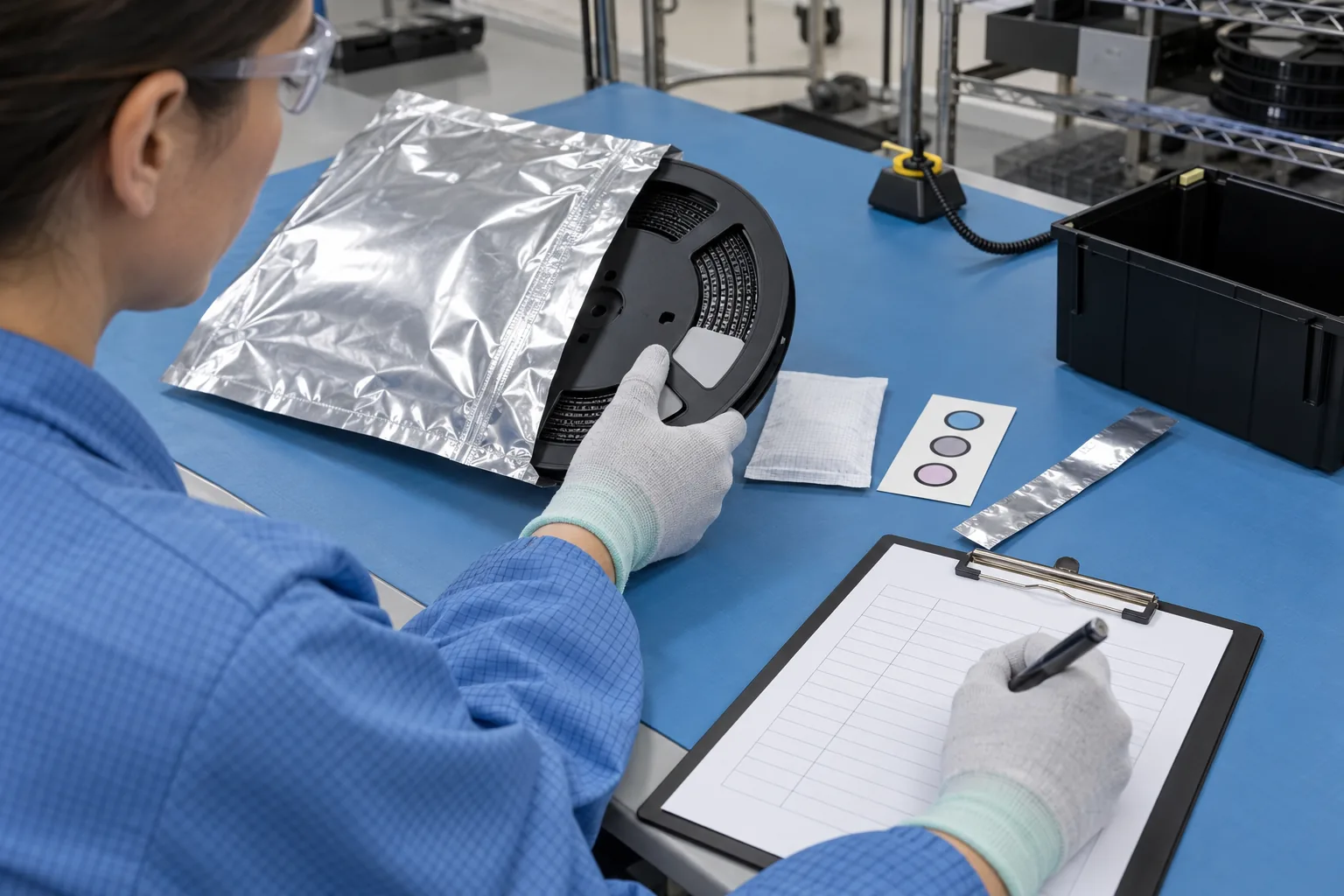
Match identity first, then judge protective-package condition. Record the manufacturer part number, package/order code, quantity, lot/date information supplied, MSL and peak reflow classification where shown, and the warning label. Inspect the moisture-barrier bag for punctures, open seams or an unreadable label. When the package is opened under the receiving plan, read the humidity indicator card as its instructions require and confirm the expected desiccant is present.
| Check | Acceptable evidence | Hold trigger | Recorded action |
|---|---|---|---|
| Identity | Orderable part, package code, quantity and supplied lot data agree with the BOM/purchase record. | Part, package or lot identity is missing or conflicts. | Separate the material and resolve the affected BOM line. |
| Moisture label | MSL, reflow classification and handling information are legible where applicable. | Required label is absent, damaged or does not match the item. | Use manufacturer product data to resolve the exact orderable part. |
| Barrier package | Bag and sealed edges are intact; there is no puncture or unplanned opening. | Seal failure, puncture, water damage or uncertain prior opening. | Record condition and quarantine before counting available exposure. |
| HIC and desiccant | Card is read at opening under its stated method; required desiccant is present. | Indication is outside the acceptable state, card is unreadable, or desiccant is missing. | Preserve the package and route to the documented disposition. |
| Traceability | Container, reel/tray/tube and internal labels can be linked to the order and BOM line. | Mixed, detached or contradictory labels. | Do not merge material while identity remains unresolved. |
How should floor-life exposure be recorded from opening to reflow?
Use one cumulative clock per traceable container or split quantity and record every change of custody. The log starts when the protective condition ends, not when production happens to notice the reel. Record opening time, the quantity or container identity, relevant ambient condition, each issue to kitting or line, each return, the exposure consumed during stops and the remaining status used for the next decision.
When one reel is split, create linked child records; do not copy the original allowance into both records as if each received a fresh clock. If pieces from different exposure histories are combined, the safest valid history must remain distinguishable. A shift change, feeder move or warehouse return is a handoff, not a reset.

Does resealing or dry storage reset floor life?
No. Repacking or approved dry storage may pause exposure, preserve remaining time or remove moisture under a defined method, but a storage action alone is not proof that the original floor life has been restored. Keep the consumed time in the record. Apply the device/package manufacturer's instruction and the handling standard method before assigning a new dry-state basis.
When can the material continue, and when should it be isolated?
Continue only when identity, package status and cumulative exposure are all known and remain inside the applicable instruction. Isolate when any one of those facts is missing, when the HIC/package condition is unacceptable, or when time or conditions exceed the governing limit. Quarantine prevents an undocumented decision from being copied into a complete pilot lot.
| Observed condition | Immediate disposition | Information needed next | Release basis |
|---|---|---|---|
| Identity verified; package acceptable; exposure within the recorded allowance | Continue with the remaining time visible to the line. | Planned setup, stop and reflow timing. | Exact label/data and uninterrupted exposure record. |
| Bag is sealed but prior opening or reseal history is unknown | Hold; do not assume a fresh dry pack. | Prior exposure, reseal method and component guidance. | Documented dry-state restoration or another authorized route. |
| HIC/package condition is unacceptable | Quarantine the affected container. | Manufacturer handling instruction, packaging compatibility and traceable identity. | Completed disposition with restored protection or rejection. |
| Cumulative time or conditions exceeded | Stop before reflow and identify affected quantity. | Exact package, exposure history and permitted recovery method. | Applicable component/standard instruction and completed record. |
| Part, package or lot labels are mixed | Physically segregate every uncertain group. | BOM line, orderable part, lot evidence and count. | Resolved identity; moisture handling does not correct mixed material. |
How should baking, dry storage and packaging limits be balanced?
Choose the least damaging valid route from the exact device and carrier instructions. A bake intended to remove moisture can deform a low-temperature reel, tray or tube, oxidize finishes, reduce solderability margin after repeated heat exposure, disturb coplanarity during transfer, or create a new ESD/handling risk. Dry storage may preserve or recover a defined state more gently, but it is not interchangeable with every bake condition.

Before any recovery action, identify whether the carrier material is rated for the proposed temperature, whether parts must be transferred, how transfer protects leads and package surfaces, and how repeated heat could affect solderability. Record the instruction source and revision, action start/finish and the new status. Never copy one temperature, duration, humidity or recovery rule across all packages.
What can a copyable moisture-sensitive material handoff record look like?
Keep identity, exposure and disposition in one traceable record. The following fields can be copied into a traveler or spreadsheet without assuming a universal floor-life number.
Material header: Project / assembly [ ] | BOM line [ ] | Manufacturer part and package code [ ] | Supplier/reel/tray/tube ID [ ] | Lot/date code as supplied [ ] | Quantity [ ] | MSL and reflow classification source [ ] | Bag/seal condition [ ] | HIC result and reading time [ ] | Desiccant present [ ].
Exposure event: Event no. [ ] | Open / issue / line setup / stop / return / reseal / dry storage [ ] | Quantity/container [ ] | Start [date/time] | End [date/time] | Recorded condition [ ] | Cumulative exposure carried forward [ ] | Remaining status basis [ ] | Person/station [ ].
Disposition: Continue / hold / dry-store / bake per instruction / reject [ ] | Reason [ ] | Device or standard instruction and revision [ ] | Carrier temperature compatibility checked [ ] | Action start/finish [ ] | New package/HIC/desiccant details [ ] | Released quantity [ ] | Decision owner/date [ ].
For the commercial material boundary, connect this record to component sourcing; for the actual placement/reflow route, use the SMT assembly page. The record improves the handoff without claiming a PCBArise dry-cabinet, oven or proprietary recovery capability.
About the author
PCBArise Electronics
PCBArise Electronics publishes this guide to help design and NPI teams prepare clearer manufacturing files. The requirements for any actual build are confirmed from its current design package.
FAQ
Common questions
Is MSL the same as an ESD or general humidity rating?+
No. MSL describes a package’s sensitivity to absorbed moisture when it is later heated by reflow or applicable rework. ESD controls electrostatic discharge, while a finished product’s humidity rating describes a different use condition. One component can require both MSL and ESD controls.
When does floor-life tracking start for a moisture-sensitive component?+
Start at the event that ends the documented dry protective state, normally opening the qualified moisture-barrier bag. Record the container and time immediately, then carry cumulative exposure through kitting, feeder setup, stops, splits, returns and reflow.
Does putting an opened reel back in a sealed bag reset floor life?+
No. A bag return may protect the reel from further exposure only when the defined packaging method is followed. Keep the exposure already consumed. Assign a restored dry state only after the applicable device and handling instruction supports that action.
What should be checked when a dry pack arrives?+
Verify the exact part/package, quantity, supplied lot identity, moisture and reflow label, seal integrity and traceability. At the controlled opening, read the humidity indicator card by its instructions and confirm the required desiccant is present.
When should moisture-sensitive material be quarantined before assembly?+
Quarantine it when identity is uncertain, the barrier bag or label is damaged, the HIC result is unacceptable, desiccant is missing where required, prior opening is unknown, or cumulative exposure has exceeded or cannot be compared with the applicable instruction.
Can every moisture-sensitive component use the same baking cycle?+
No. The valid action depends on the exact package, moisture history, device-maker guidance and carrier-material temperature rating. Baking can deform packaging, disturb leads during transfer or reduce solderability margin, so do not apply one temperature or duration to all parts.
Technical references
Sources used for this guide
These sources explain the standards, materials or process details discussed above. Check the current revision when applying them to a new design.
- Global Electronics Association — document revision table for J-STD-020F and J-STD-033D
- IPC/JEDEC J-STD-033D — public scope and contents for moisture/reflow-sensitive device handling
- Texas Instruments — applying moisture sensitivity levels and reflow classifications
- Texas Instruments — dry-pack opening, storage and packaging-temperature cautions
- NXP — package-specific moisture sensitivity and assembly guidance
- IEC 61760-4:2026 — classification, packaging and handling scope for applicable non-semiconductor devices