
In short
Learn the practical difference between a bare PCB and a PCBA, including process, files, cost, lead time and when to order each.
For practical steps on BOM, placement data and assembly drawings, see the PCB assembly guide.
PCB vs PCBA: The Core Definition
The terms sound almost identical, and they are often used loosely — but they refer to two distinct stages of electronics manufacturing.
Use the PCB manufacturing and PCB assembly pages to map the bare-board and populated-board steps, then request an engineering review.
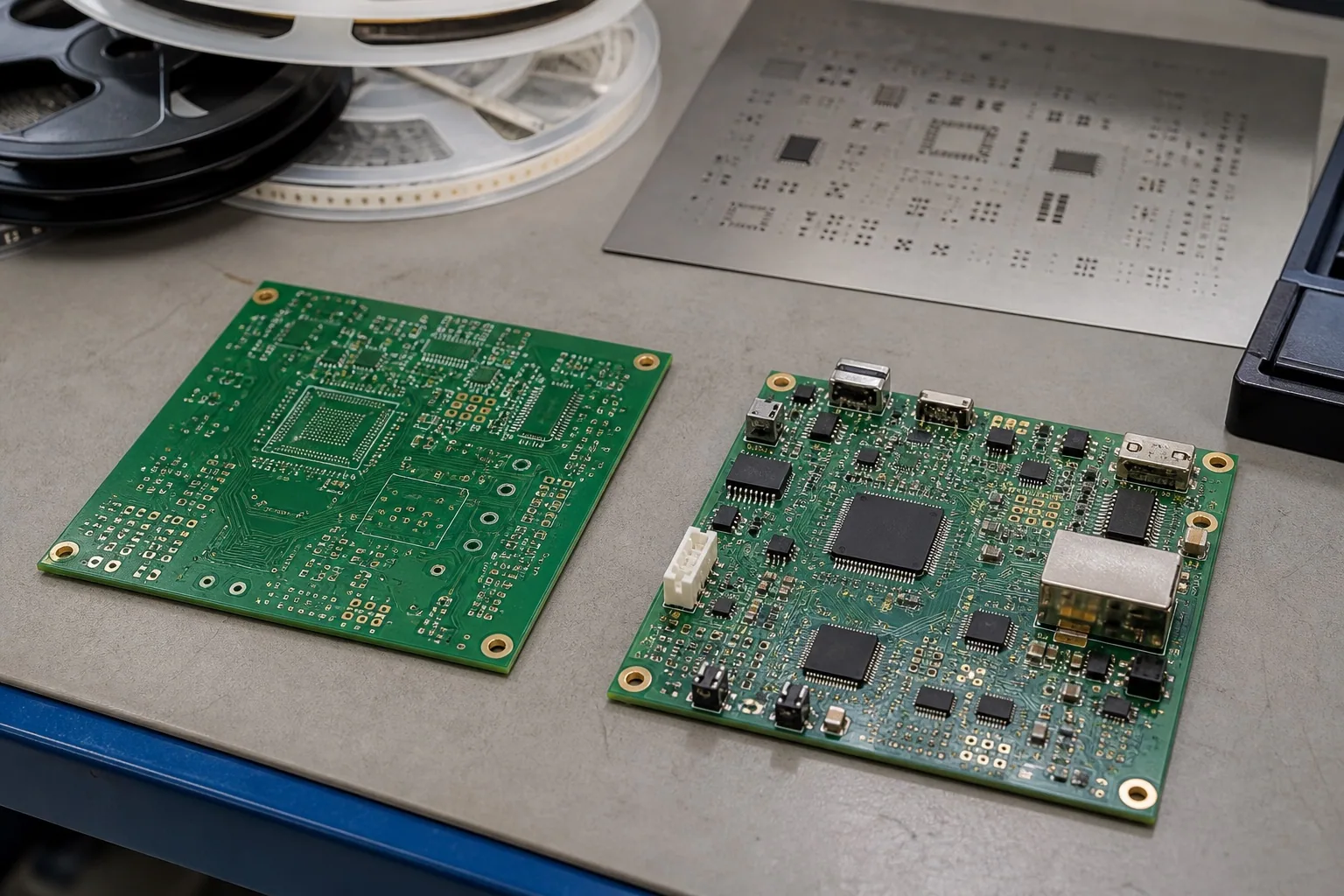
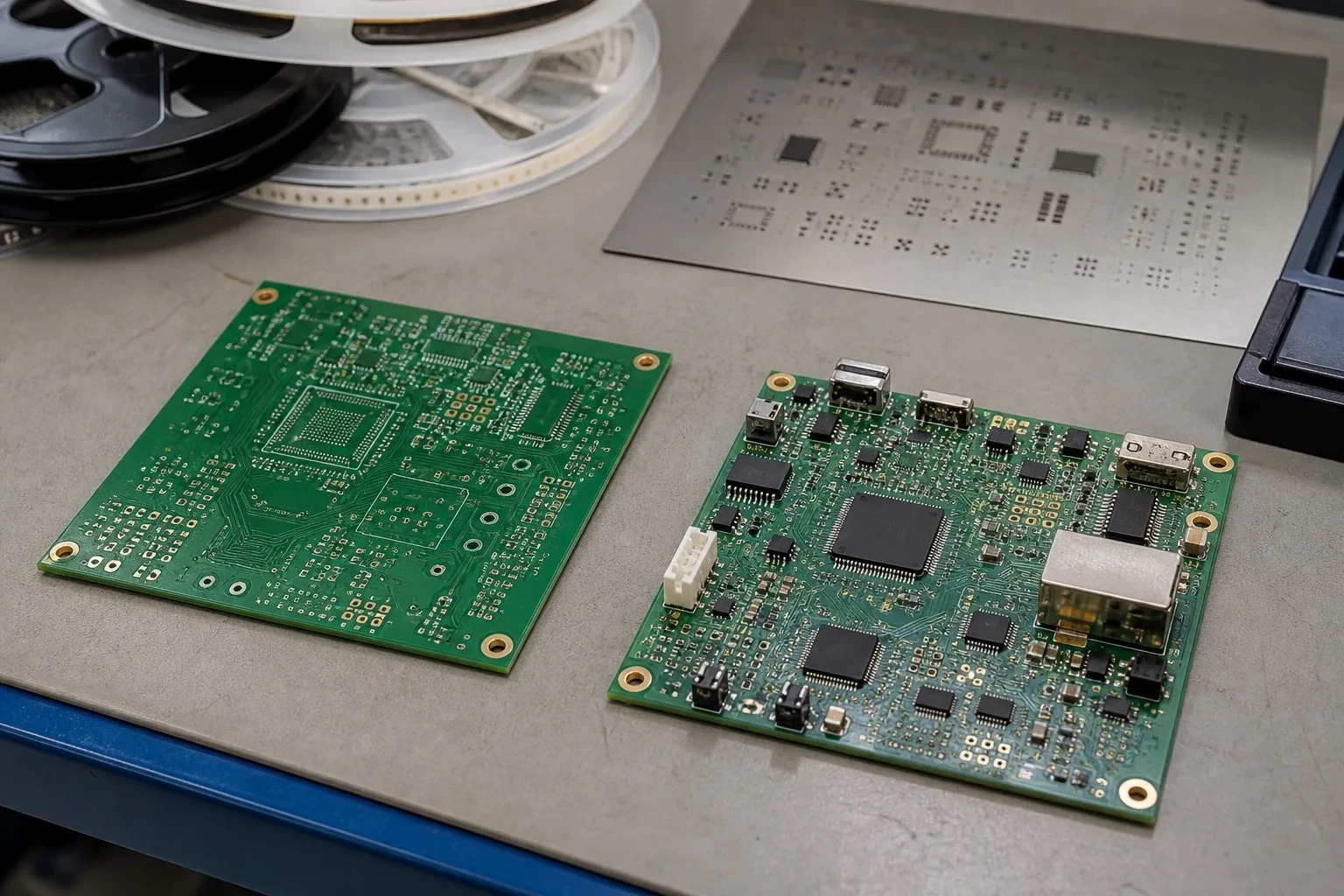
- PCB (Printed Circuit Board) — the bare board. A non-conductive substrate (usually FR-4) with etched copper traces, pads, and vias. It has no components on it and cannot function on its own.
- PCBA (Printed Circuit Board Assembly) — the populated board. The PCB after resistors, capacitors, ICs, connectors and other components have been soldered on. It is an assembled board; programming, test and functional confirmation depend on the released project requirements.
The extra "A" in PCBA stands for Assembly. No components = PCB. Components soldered on = PCBA.
PCB vs PCBA Compared
The two differ across every practical dimension a buyer cares about — the files you provide, the process, cost drivers, and lead time.
| PCB (Bare Board) | PCBA (Assembled) | |
|---|---|---|
| What it is | Etched board, no components | Board + soldered components |
| Functional? | Not by itself | Depends on programming and test requirements |
| Files needed | Gerber + drill | Gerber + BOM + Pick & Place |
| Main process | Fabrication (etch, drill, plate) | Assembly (SMT / THT soldering) |
| Cost driver | Layers, size, material | Component cost + placement count |
| Typical lead time | Project-confirmed after file review | Project-confirmed after file review |
| You order it when | You assemble in-house | You want ready-to-use boards |
From PCB to PCBA: The Process
A PCBA always starts as a PCB. Fabrication produces the bare board; assembly adds components and any required programming or test steps.
- 01PCB fabrication
The bare board is manufactured — laminate is etched, drilled, plated, solder mask and silkscreen applied. Output: a tested bare board.
- 02Solder paste & SMT placement
Solder paste is stencil-printed onto pads, then surface-mount components are placed by pick-and-place machines and reflowed.
- 03Through-hole (if needed)
Larger or high-stress components (connectors, some capacitors) are inserted and wave- or hand-soldered.
- 04Inspection & testing
AOI, X-ray (for BGA), and electrical/functional testing verify the assembly. Output: an assembled PCBA; programming and test status depend on the project scope.
Which One Do You Need?
It comes down to whether you have the equipment and supply chain to assemble boards yourself.
- Order PCB only if you run your own SMT line, are prototyping the board layout, or source components separately.
- Order PCBA if you need components assembled onto the board. In a turnkey order, the supplier also sources the agreed BOM. Programming and functional testing must be defined in the order; a populated board is not automatically a verified, ready-to-use product.
With turnkey PCBA the supplier buys the agreed components; with consigned assembly you supply them. Partial turnkey splits the BOM. Choose based on who can manage availability, approvals and material risk for your project.
FAQ
Common questions
Is PCBA the same as PCB assembly?+
Yes. PCBA stands for Printed Circuit Board Assembly, which is the result of the PCB assembly process — a bare PCB populated with soldered components.
What files do I need for PCB vs PCBA?+
For a bare PCB you need Gerber files and a drill file. For PCBA you additionally need a BOM (bill of materials) and a Pick & Place (centroid) file so components can be sourced and placed correctly.
Is PCBA more expensive than PCB?+
Yes, because PCBA cost includes the bare board plus component cost and assembly labour. For low-value boards the components often cost more than the board itself.
Can I order PCB and PCBA from the same manufacturer?+
Yes. Some suppliers coordinate bare-board fabrication and assembly under one order. Ask which site performs each step, what is included in the quotation and how the board and assembly revisions are kept aligned.
Technical references
Sources used for this guide
These sources explain the standards, materials or process details discussed above. Check the current revision when applying them to a new design.