Moisture and contamination
Define the exposure, protected zones and expected service condition before selecting a material or application method.
PCB conformal coating services provide conformal coating for PCB assemblies when the operating environment, contamination risk or insulation requirement calls for additional protection. Material, masking, coverage, curing and inspection are defined per project.
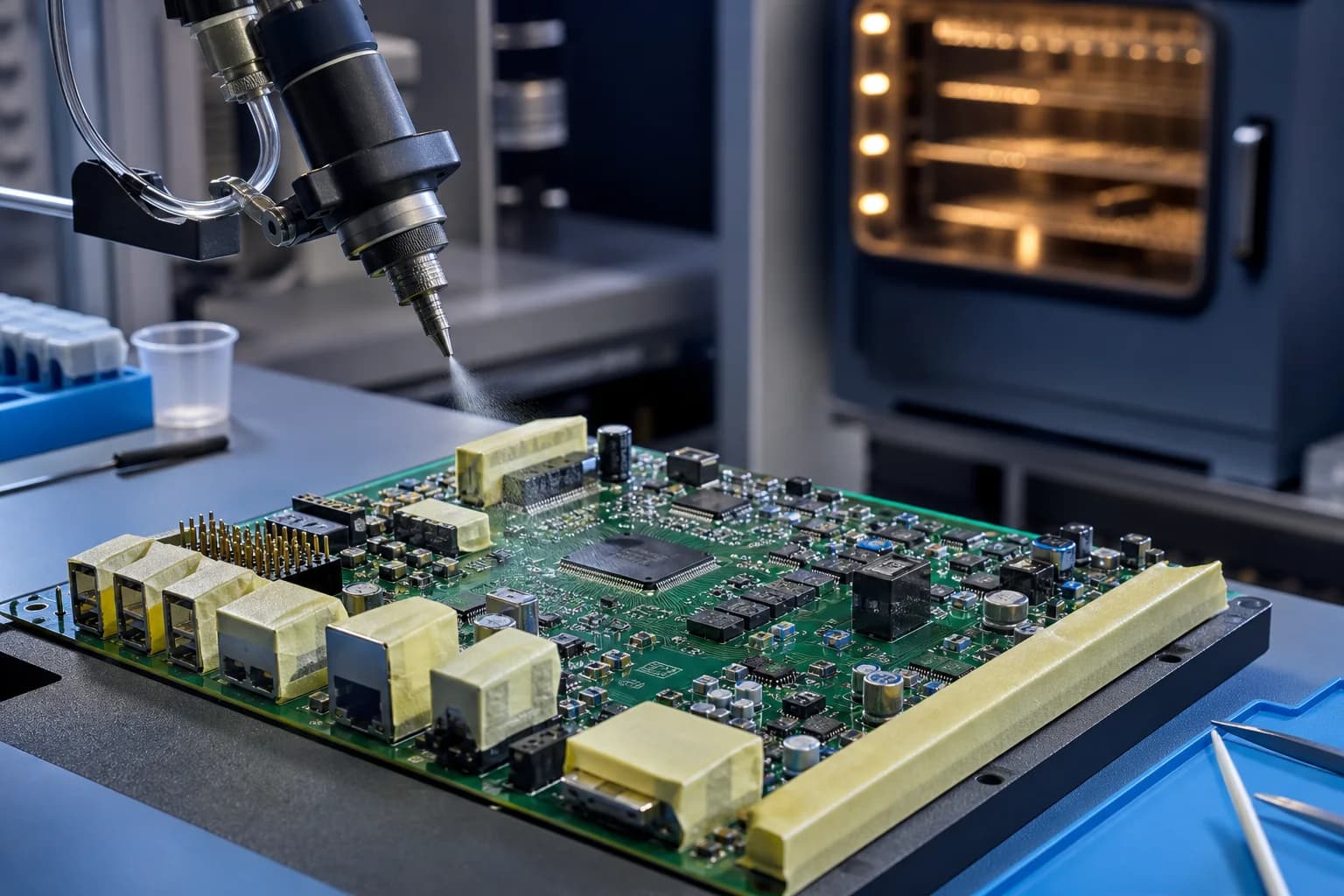
Conformal coating is a thin protective layer applied to selected surfaces of a PCB assembly. It can support environmental protection, but the correct material and process depend on temperature, moisture, contamination, repairability, connector access and the product acceptance plan.
A coating decision has to protect the intended area without covering connectors, test points, heat-transfer surfaces, switches or service interfaces that must remain usable.
Define the exposure, protected zones and expected service condition before selecting a material or application method.
Mask connectors, contacts, test points, thermal interfaces and other areas that must remain accessible.
Match cure time, temperature and handling to the coating system, components and assembly constraints.
Retain visible identifiers, inspection access and a documented repair or removal boundary for the finished board.
The coating plan should connect material, application, masking, cure, inspection and rework requirements to the released assembly.
Provide the operating environment, coating drawing, keepouts, material preference and acceptance criteria before coating is quoted.
| Operating environment | Temperature, humidity, dust, chemicals, condensation and expected service exposure |
|---|---|
| Protected area | Top, bottom, selected zones or full-board scope defined by drawing and product need |
| Keepouts | Connectors, contacts, switches, test points, labels, sensors and thermal interfaces identified |
| Material selection | Coating family and compatibility reviewed against components, substrate, cure and serviceability |
| Application method | Spray, selective or other controlled application route confirmed for the board and coverage plan |
| Cure and handling | Cure time, temperature, fixtures and handling window defined before downstream operations |
| Inspection | Coverage, bubbles, bridging, contamination, keepout and visible defect criteria agreed |
| Repair boundary | Removal, rework, touch-up and re-coating responsibility defined for the product |
Connectors, test points, heat sinks, labels and service locations can be as important as the protected copper. A coating drawing keeps environmental protection from creating a new assembly or maintenance problem.
The review turns an environmental requirement into a repeatable coating and inspection route.
Use conformal coating when the product environment and released design call for a controlled protective layer beyond the bare assembly.
Assemblies exposed to dust, humidity, condensation risk or demanding factory environments.
Selected boards where the environmental profile, interfaces and thermal path support a coating route.
Assemblies where protection is required but connectors, antennas, sensors and service areas must remain accessible.
Quality documents
The published ISO records name Zhongshan Wenquan Electronic Manufacturing Co., Ltd. and its Zhongshan PCBA facility. They do not certify every PCBArise facility, service or product.
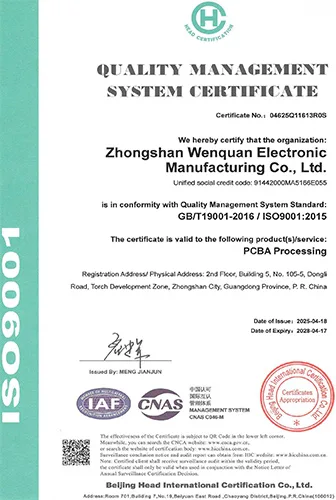
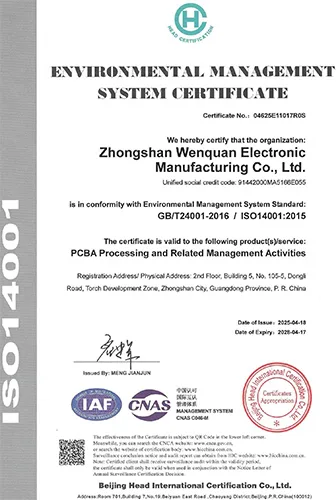
These are management-system certificates, not product or batch COAs. No batch inspection reports or COAs are currently published here.
Use these conformal coating answers to define environmental need, masking, cure, inspection and serviceability.
Conformal coating is a protective layer applied to selected surfaces of a PCB assembly. The material, coverage and curing process are chosen from the operating environment, component compatibility and keepout requirements.
Not automatically. Protected areas and keepouts are defined by the coating drawing. Connectors, contacts, test points, thermal interfaces and service areas often require controlled masking.
Yes, when test access and the repair boundary are defined before coating. The process should preserve required test points and document removal, touch-up and re-coating rules.
Inspection can review coverage, bubbles, bridging, contamination, visible defects and keepout compliance against the project drawing and acceptance criteria.
Review conformal coating as part of the complete PCBA route, including inspection, functional testing and final integration.
Share the operating environment, coating drawing, keepouts, material requirements and inspection criteria for a conformal coating review.