In short
Choose turnkey, partial-turnkey or consigned PCB assembly by assigning responsibility before a quote is compared: identify who owns each BOM line, purchasing authority, material condition, shortage response, alternates, excess or attrition and agreed evidence. Turnkey can coordinate an agreed supply scope; consignment keeps selected material under buyer control; partial turnkey splits the BOM. None is automatically cheaper or faster—the released package and written boundary control the project.
For repeatable pilot and small-batch orders, review the files, sourcing and schedule on the low-volume PCB assembly page.
Three practical ways to supply PCB assembly parts
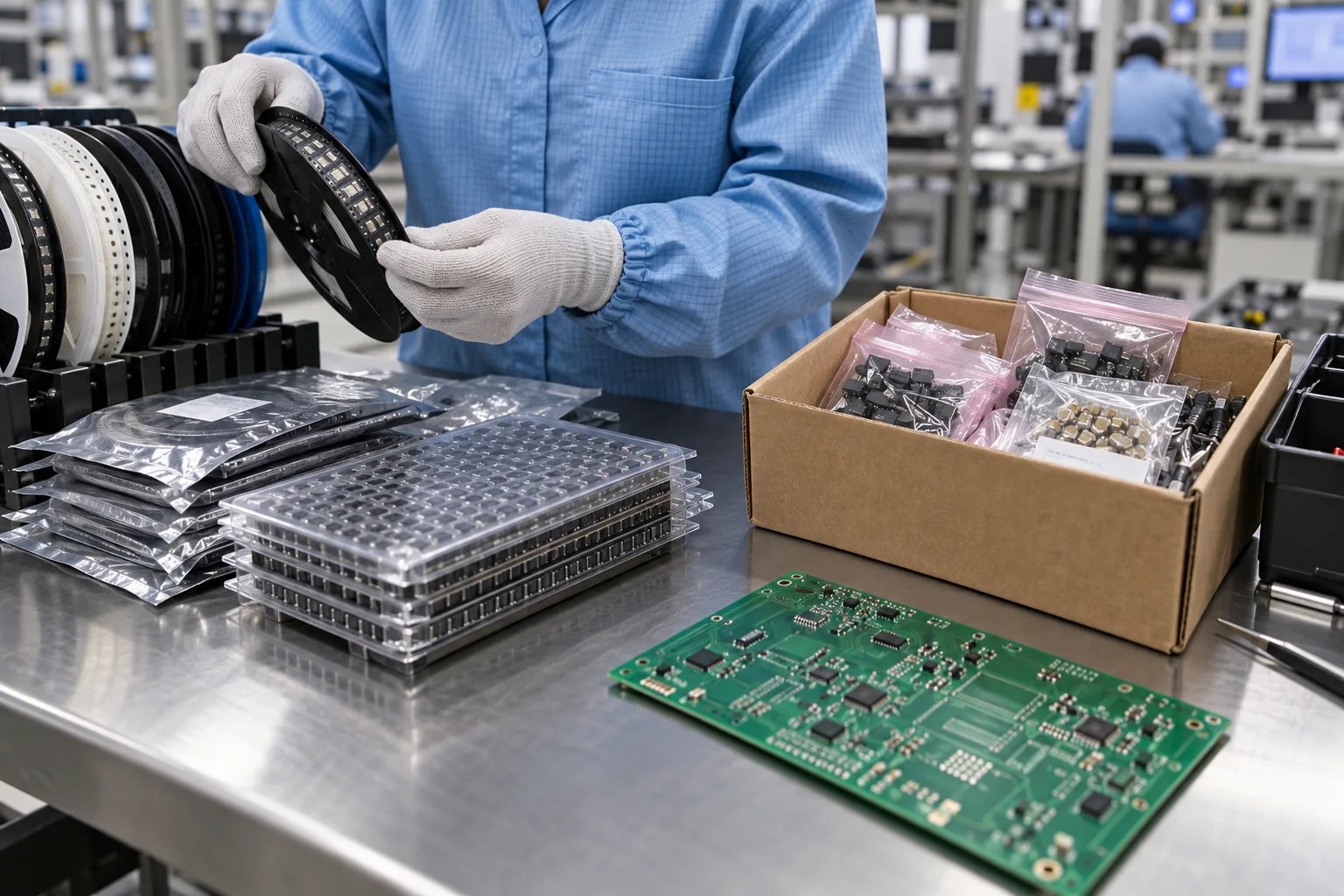
In full turnkey PCB assembly, the assembler purchases the agreed BOM lines as well as building the boards. In consigned assembly, you provide the components for the agreed assembly scope. Partial turnkey divides the BOM: for example, you may supply a constrained IC while the assembler sources passives. The names describe material responsibility, not a fixed price or lead-time result.
Before requesting either quote, mark each BOM line with its manufacturer part number, quantity, approved alternatives and purchasing owner. Identify components already in stock, parts subject to allocation and any customer-controlled or programmed devices. The assembly drawing, placement data and board revision should match that BOM.
Compare the risk boundary, not just the unit price
A consigned quote may exclude component cost, but the buyer still needs to account for purchasing, shipping, customs, packaging, attrition and late or defective material. A turnkey quote may include purchasing work, but its material price, approval process and excess-stock terms need review. Neither model is automatically cheaper or faster for every build.
Ask what happens if a supplied part arrives short, damaged, with an uncertain date code or in packaging unsuitable for the line. Decide who pays for replacement, who approves an alternate and whether the build pauses. For mixed sourcing, agree how the assembler will distinguish customer-owned material from purchased material in receiving and traceability records.
Set a clear approval and change process
A supplier should not substitute a component because it appears electrically similar or is available today. Identify the person authorized to approve form, fit, function, package, firmware and lifecycle changes. Record the approved scope in the BOM or build record before the part is committed to production. A sourcing suggestion or email discussion alone is not a release.
Use the same files, quantity, yield and testing assumptions when asking for both assembly models. Separate bare-board fabrication, parts, assembly, inspection, programming, test, tooling, freight and any one-time charges. A comparison table that stops at assembly labor will not show the total project cost.
Choose the model that fits your team
Consignment can make sense when you already control inventory or have contractual access to critical parts. Turnkey can reduce the number of purchasing handoffs when the assembler can source the agreed BOM. Partial turnkey is useful when only a few lines need buyer control. The best route is the one whose material, approval and evidence responsibilities your team can actually manage.
See component sourcing for BOM readiness and turnkey PCB assembly for the manufacturing scope. If you are comparing quotations, send the same released package to each provider.
FAQ
Common questions
Is turnkey PCB assembly always more expensive than consigned assembly?+
No. Compare total delivered cost, including parts, procurement work, shipping, attrition, tooling and schedule effects, against the same released design.
Who is responsible for defective consigned parts?+
For consigned parts, the buyer normally supplies replacements when the supplied material is defective or short; the assembler is responsible for damage caused after agreed receipt and handling. Put the receiving check, evidence for a defect, replacement freight, attrition allowance and schedule impact in the purchase terms so a disputed part does not stop the build without an owner.
Can I consign only selected components?+
Yes, if the assembler accepts a partial-turnkey model. Mark purchasing ownership and approval rules on each relevant BOM line.
Technical references
Sources used for this guide
These sources explain the standards, materials or process details discussed above. Check the current revision when applying them to a new design.