
Validate the design
Build enough hardware to confirm power-up, interfaces, fit and the highest-risk assembly features.
Low-volume PCB assembly is for engineering samples, pilots and small repeat orders that still need a consistent build. PCBArise checks the BOM, materials, process setup and test needs so each batch can teach or support the next one.
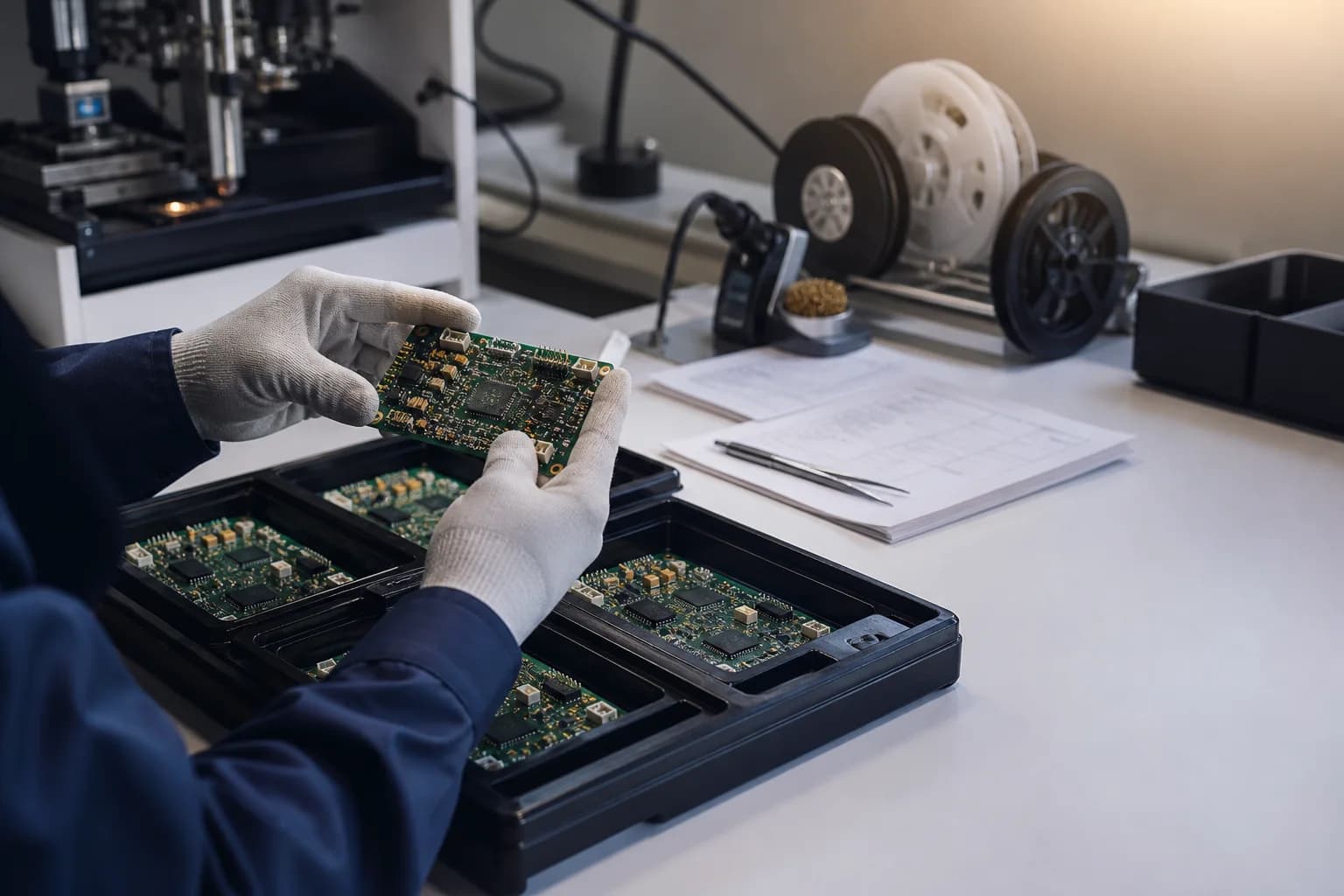
Low-volume PCB assembly is a controlled production route for small quantities after or alongside prototype learning. It keeps revision, material, process and acceptance records explicit so a pilot build can produce usable hardware and a repeatable baseline.
A small order still needs a released revision, approved material plan, controlled process setup and evidence that can be used for the next build.
Build enough hardware to confirm power-up, interfaces, fit and the highest-risk assembly features.
Use production-intent material and process controls while capturing issues before repeat production.
Produce a controlled quantity with clear revision, packaging, test and traceability requirements.
Carry approved sources, setup data, inspection results and test procedures into the next volume decision.
A low-volume quote becomes reliable when the files, material ownership, process route and acceptance plan are all visible.
Quantity and schedule are confirmed after the released package, component availability, setup and test requirements are reviewed.
| Build stage | Engineering sample, NPI pilot, field trial or repeat small batch |
|---|---|
| Revision package | Gerber or ODB++, BOM, CPL, assembly drawing and one released revision identifier |
| Material plan | Supplier-sourced, customer-consigned or partial-turnkey ownership defined per BOM line |
| Process route | SMT, THT or mixed-technology sequence selected from package and board requirements |
| Setup requirements | Stencil, fixtures, panel handling, programming and special tooling identified before release |
| Inspection plan | SPI, AOI, X-ray, visual inspection and electrical or functional test assigned to product risk |
| Issue capture | Nonconformance, rework, approved deviation and design feedback recorded against the build |
| Production handoff | Approved source, process, test and packaging information retained for the next order |
The value of a low-volume PCB assembly build is not only the unit count. It is the ability to expose material, assembly, test and packaging issues while the cost of changing the released build is still manageable.
The review defines a practical pilot route and the evidence needed to decide whether the build is ready to scale.
Choose low-volume assembly when the product needs more control than a one-off prototype but is not yet ready for a recurring high-volume schedule.
Validate the assembly route, approved material plan and first production evidence.
Build controlled units for demonstrations, integration and limited deployment.
Support recurring but modest quantities where revision control and traceability matter more than line scale.
Quality documents
The published ISO records name Zhongshan Wenquan Electronic Manufacturing Co., Ltd. and its Zhongshan PCBA facility. They do not certify every PCBArise facility, service or product.
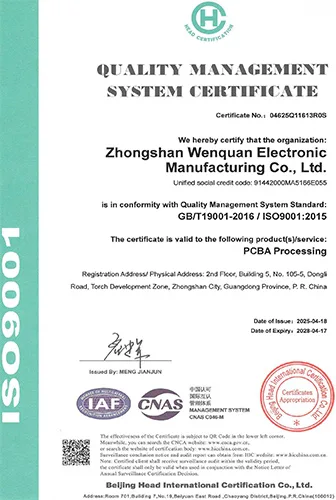
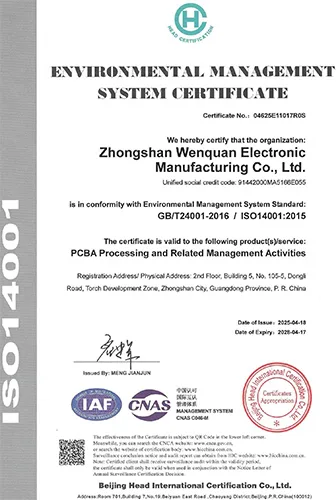
These are management-system certificates, not product or batch COAs. No batch inspection reports or COAs are currently published here.
Use these low-volume PCB assembly answers to separate prototype learning, pilot production and repeat-build readiness.
Low-volume PCB assembly is a controlled route for prototypes, pilot runs and small-batch PCBA. It combines the required SMT or THT process with sourcing, inspection, test and revision records appropriate to the build.
Not always. Prototype assembly is focused on design learning; low-volume assembly may support pilot, field or repeat production and therefore needs a clearer production baseline and handoff plan.
Yes. Full turnkey, partial-turnkey and consigned material boundaries can be reviewed. Quantity, condition, traceability and shortage responsibility should be agreed before the parts arrive.
The published planning range for low-volume assembly is 5–7 business days after files and materials are ready. Component procurement, bare-board fabrication, new fixtures and transport add separate time; list each in the order schedule.
Compare prototype, high-volume, turnkey, sourcing and testing services before committing the next build stage.
Share the current files, BOM, quantity, validation objective and target handoff so engineering can review the low-volume PCBA route.