
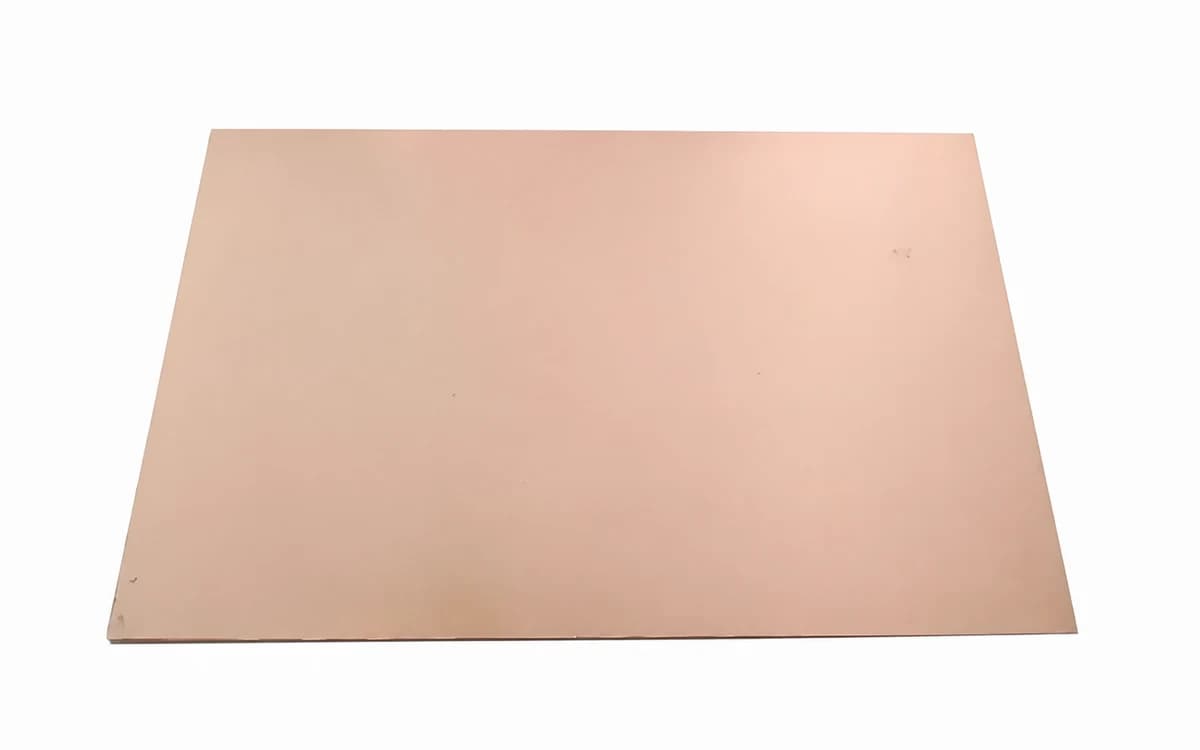
FR-4
A cost-effective general-purpose material for most industrial, commercial and consumer electronics.
Choose a PCB material and stackup that fit the way your product carries signals, power and heat. Compare FR-4, high-Tg, RF, flexible and metal-backed options, then check the full construction against your design files.
Compare material families by electrical, thermal, mechanical and assembly requirements before the stackup is released.
A cost-effective general-purpose material for most industrial, commercial and consumer electronics.
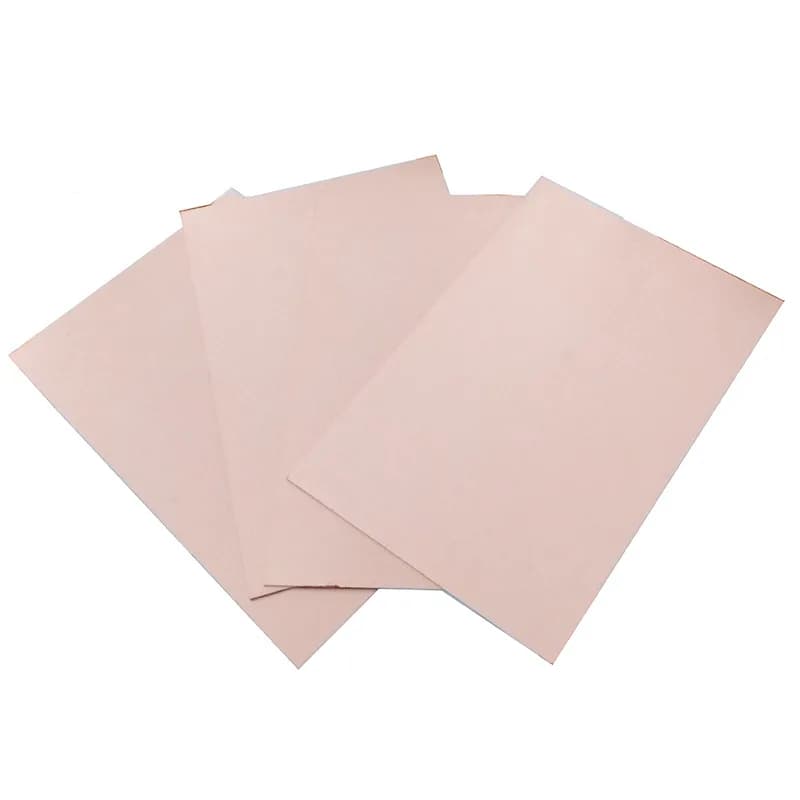
Improved thermal stability for multilayer boards, lead-free assembly and applications exposed to repeated thermal cycles.
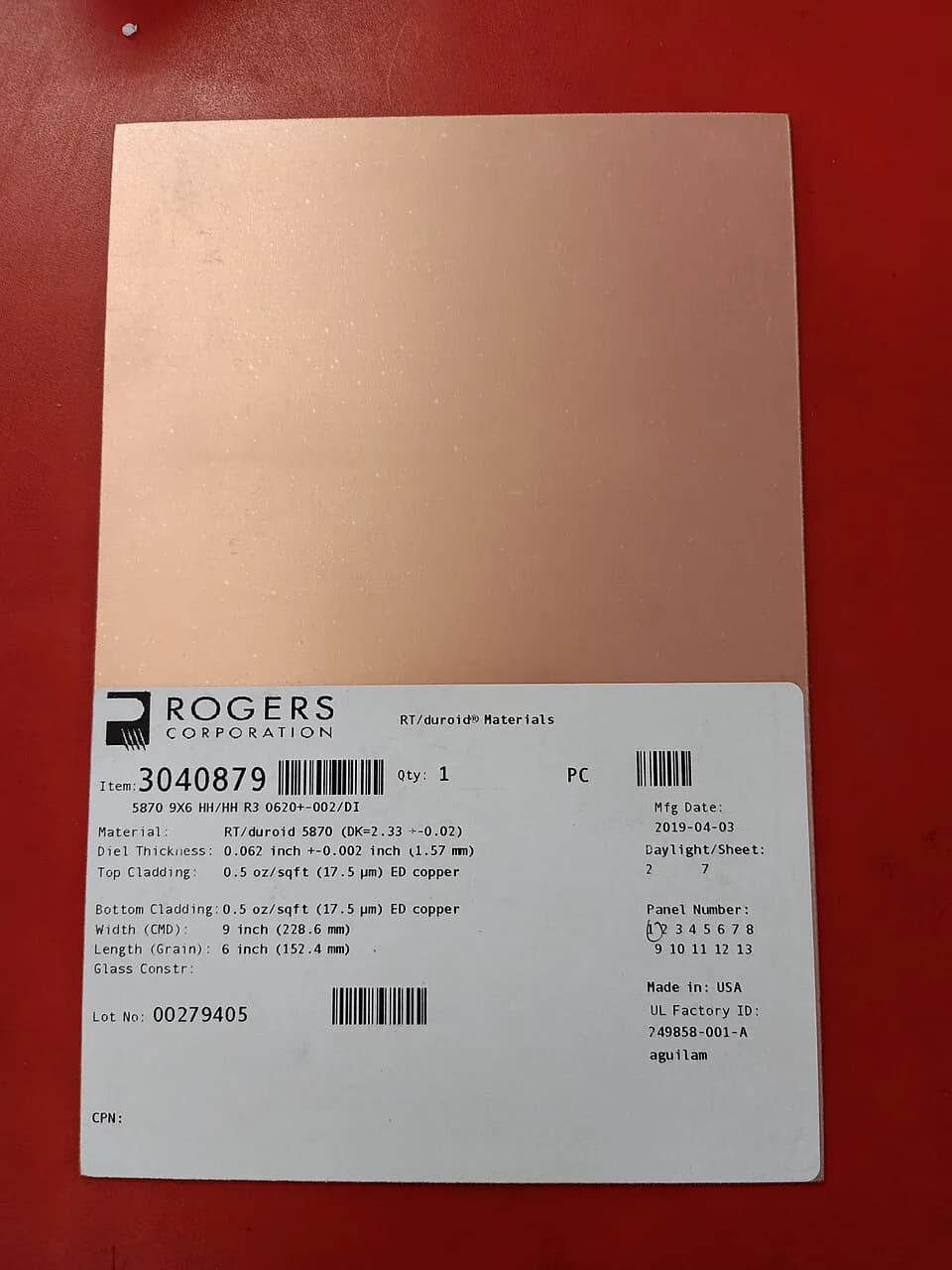
Specialized laminates for RF, microwave, antenna and high-frequency signal applications.
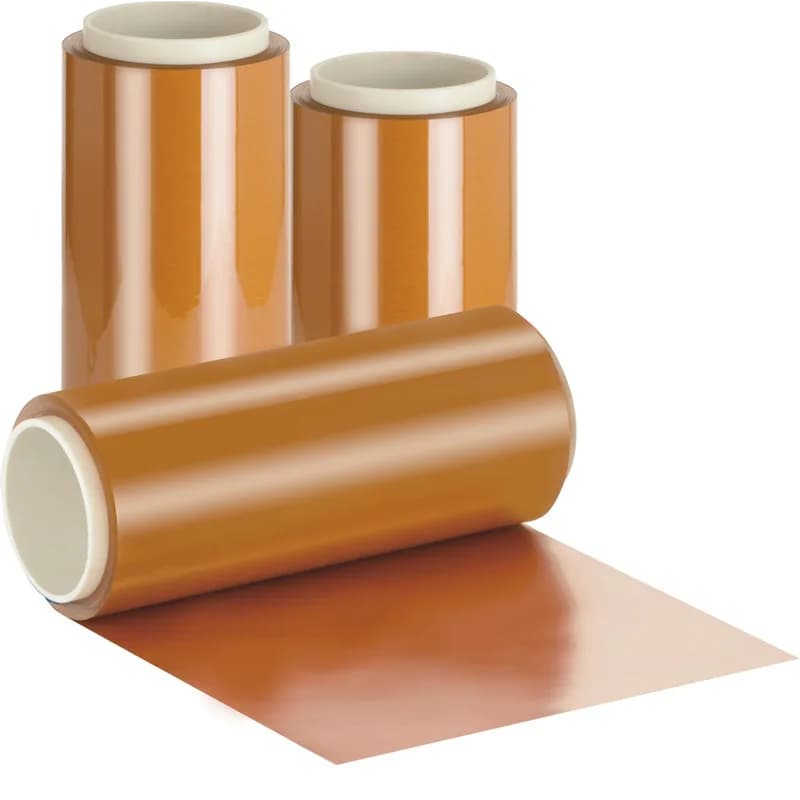
Polyimide material used for flexible and rigid-flex PCB structures requiring bending or compact interconnection.
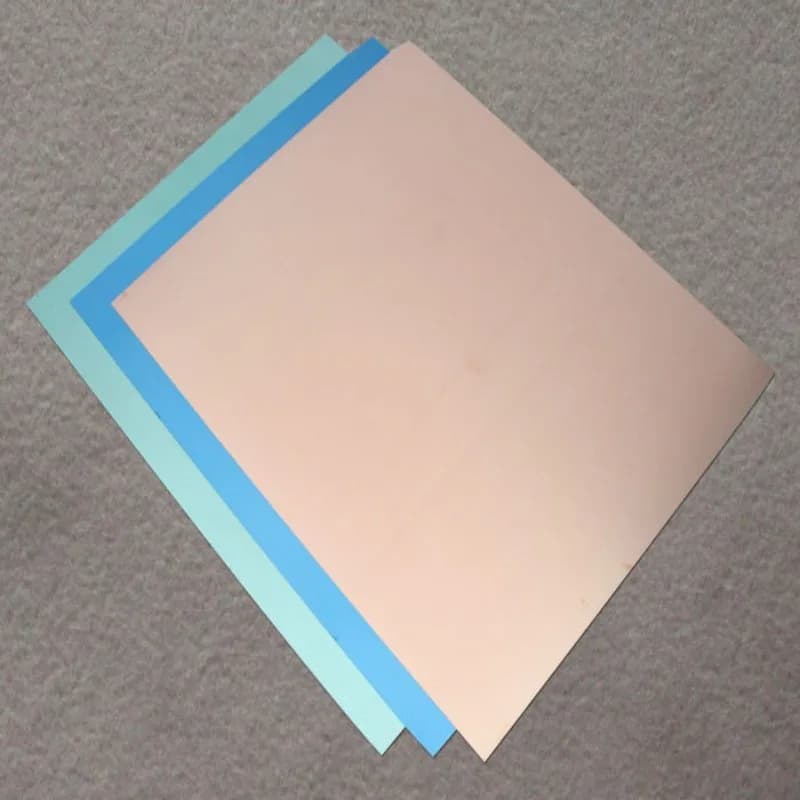
Metal-core material used for LED lighting, power electronics and thermal-management applications.
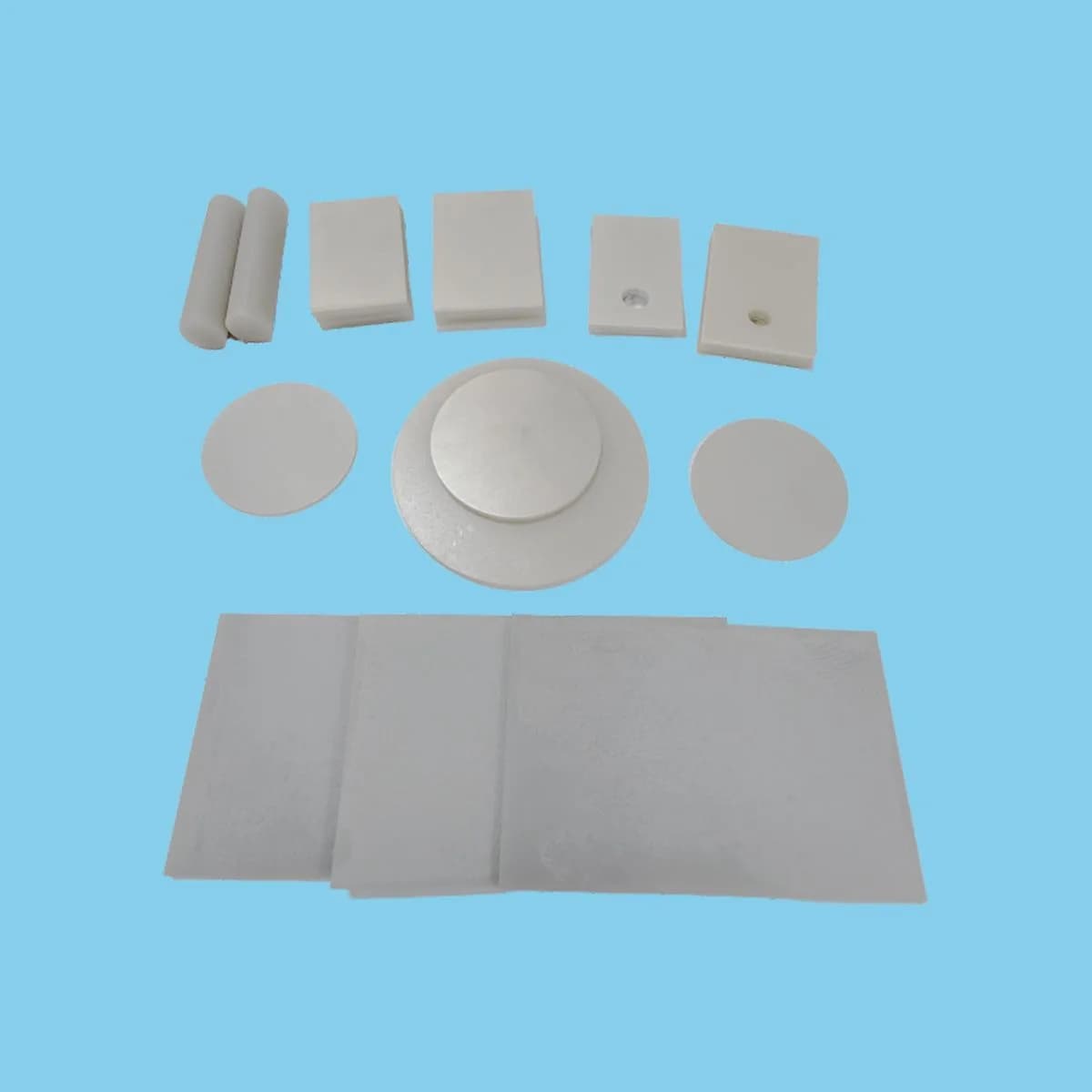
Specialized material for high-temperature, high-power-density and advanced thermal applications.
| Project Requirement | Typical Material Direction | Selection Consideration |
|---|---|---|
| General-purpose electronics | FR-4 | Balanced cost, availability and manufacturability |
| Multilayer or higher thermal demand | High-Tg FR-4 | Improved thermal stability |
| RF, microwave or antenna | Rogers / Taconic / Teflon | Controlled dielectric properties |
| RF multilayer with cost control | Hybrid RF + FR-4 stackup | Performance and cost balance |
| LED or power thermal management | Aluminum | Improved heat transfer |
| Flexible connection or bending | PI | Flexible and rigid-flex construction |
| High-temperature specialized use | Ceramic | Thermal and electrical performance |
Controlled-impedance values are calculated and confirmed using the final material, copper thickness, dielectric thickness, trace geometry and approved stackup.
Our engineering team can review proposed stackups or recommend a manufacturable layer structure based on signal integrity, controlled impedance, copper balance, dielectric thickness, via structure, board thickness and material availability.
Blind vias, buried vias, stacked microvias, staggered microvias, via-in-pad and back drilling are reviewed according to the selected material, stackup and design structure.
HASL supports general solderability; ENIG offers a flat fine-pitch surface; OSP is suitable for controlled assembly conditions; immersion tin and silver support selected applications; gold fingers and hard gold provide wear-resistant contact surfaces. Surface finish is the exposed conductor treatment; conformal coating material is a separate protective layer selected for environmental, insulation and reliability requirements.
Quality documents
The published ISO records name Zhongshan Wenquan Electronic Manufacturing Co., Ltd. and its Zhongshan PCBA facility. They do not certify every PCBArise facility, service or product.
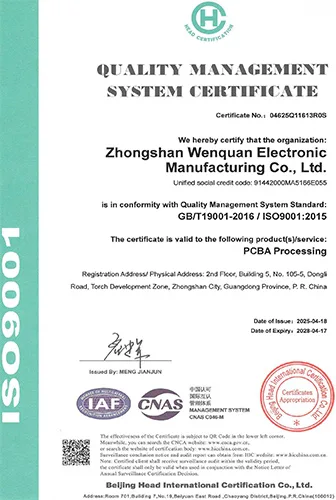
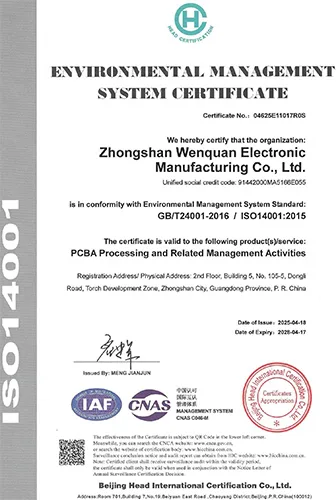
These are management-system certificates, not product or batch COAs. No batch inspection reports or COAs are currently published here.
FR4 PCB material is a general-purpose glass-reinforced laminate used for many rigid PCB constructions. High-Tg FR-4 is considered when the board or assembly requires greater thermal stability.
Compare PCB laminate by dielectric behavior, thermal profile, copper compatibility, availability, mechanical requirements and the finished stackup. The correct choice depends on the complete design rather than a material name alone.
PCB dielectric materials electrically separate copper layers and influence impedance, thermal transfer and insulation. FR-4, RF laminates, polyimide, ceramic and insulated metal substrate dielectric systems are reviewed according to the board construction.
A 6-layer PCB stackup should be selected from routing density, reference planes, power distribution, impedance targets, via structure, copper balance and fabrication capability. Submit the layer assignment and requirements for stackup review.
Ceramic PCB is evaluated for high-temperature or high-power-density thermal applications. Flexible PCB material such as polyimide is selected for folded, shaped or moving interconnects where bend performance is part of the design.
Send your layer count, board thickness, material preference and impedance requirements for engineering review.