
Full, partial or turnkey
Mark every BOM line as customer supplied, manufacturer sourced or separately approved so purchasing responsibility is unambiguous.
Consigned PCB assembly lets the customer supply the agreed components while PCBArise performs the reviewed assembly, inspection and test scope. A reliable build starts with an explicit material boundary, complete kit data and a documented response to shortages or discrepancies.
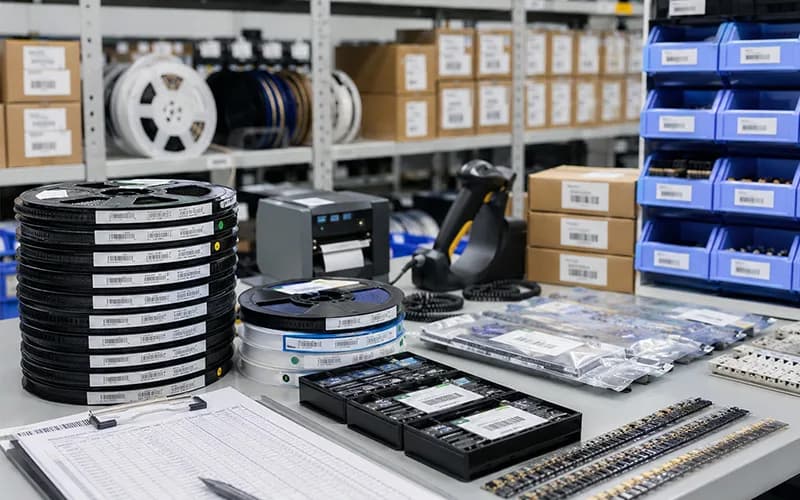
In a consigned build, the customer supplies all or an agreed portion of the production components. The assembly provider receives and checks the kit against the released BOM and scope, prepares materials for the selected SMT or THT process, assembles the boards and returns the agreed inspection, test, traceability and residual-material information. The lower sourcing boundary does not remove material risk; it moves more responsibility to the customer. Manufacturer part numbers, quantities, packaging, moisture or handling status, approved substitutions, shortage response and ownership of unused parts must be visible before the schedule is confirmed. Partial Turnkey uses the same discipline while dividing the BOM between customer-supplied and manufacturer-sourced lines.
The service model affects purchasing, schedule, traceability and who resolves a shortage. Those boundaries belong in the quote and released BOM, not in informal email assumptions.
Mark every BOM line as customer supplied, manufacturer sourced or separately approved so purchasing responsibility is unambiguous.
Use manufacturer part numbers, reference designators, quantity per board, total quantity, packaging and lot information where required.
Define who evaluates the issue, which substitutions require approval and whether reshipment, sourcing or schedule change is allowed.
Agree how unused material, packaging, receiving records, lot evidence and finished-build records are handled for the order.
Use this reference to prepare a kit that can be reconciled against the released design. Exact receiving, storage, overage, traceability and return requirements remain order-specific.
Final scope, limits and evidence are confirmed from the released build package.
| Required quote package | Gerber or ODB++, BOM, CPL/centroid data, assembly drawing, build quantity, consignment plan and available programming or test requirements. |
|---|---|
| Part identity | Manufacturer, manufacturer part number, description, package, approved alternates and no-substitute lines stated in the BOM. |
| Placement identity | Reference designator, quantity per board, no-fit status, X/Y location, rotation and board side aligned across BOM, CPL and drawing. |
| Supply ownership | Each line marked customer supplied, PCBArise sourced or subject to customer approval under a partial-turnkey route. |
| Delivered quantity | Shipment quantity and order-specific overage confirmed by package, feeder setup, packaging format, build quantity and handling requirements. |
| Packaging and labels | Reel, tray, tube or approved packaging identified so part number, quantity, lot or date-code information can be reconciled where required. |
| Receiving discrepancy | Short, damaged, open, mismatched or undocumented material isolated and reported through the agreed customer decision path. |
| Material handling | ESD, moisture, bake, shelf-life or other handling instructions supplied when the component or customer specification requires them. |
| Shortage and substitution | No silent substitution. Alternate sourcing, reshipment, quantity change or schedule change follows the approval boundary in the order. |
| Residual material | Unused parts, partial reels, trays, packaging and return or storage instructions agreed before job closeout. |
The model should be selected BOM line by BOM line when ownership is shared; names alone do not define the operating boundary.
| Full Turnkey | PCBArise sources the approved material scope; customer controls the released design, approved alternates and acceptance requirements. |
|---|---|
| Partial Turnkey | Customer supplies selected strategic, controlled, allocated or already-owned parts; PCBArise sources the remaining approved lines. |
| Full Consigned | Customer supplies the agreed complete component kit; PCBArise performs the quoted receiving, kitting, assembly, inspection and test scope. |
| Bare PCB ownership | State whether bare boards are customer supplied or included in the PCBArise manufacturing scope; do not infer this from the component model. |
| Alternate approval | Customer approval rules remain explicit in every model, especially for no-substitute and customer-controlled parts. |
| Schedule start | Production timing is confirmed after files, materials, fixtures and process readiness are reviewed; shipment of a kit alone does not prove readiness. |
| Discrepancy ownership | The agreed supply boundary determines who replaces, sources or approves action on missing, damaged, mismatched or unusable material. |
| Traceability and returns | Lot evidence, residual material, packaging and return instructions follow the project and order requirements. |
A box of parts cannot be reconciled reliably if the BOM uses generic descriptions, mixed revisions or missing reference designators. Clean material ownership begins with a released BOM and an explicit consignment plan. Compare the purchasing boundary with Turnkey PCB Assembly and use Component Sourcing when PCBArise is expected to procure any approved lines.
The quote and schedule become reliable only after design data, material ownership and discrepancy handling describe the same order.
Choose the model when customer material control creates real value and the team can support the added kit and discrepancy responsibilities.
Use already-owned, traceable material when identity, condition, packaging and quantity can be reconciled to the released BOM.
Keep selected processors, programmed parts, allocated items or contract-priced lines under customer ownership while sourcing the rest.
Consign known or scarce parts for an engineering build while keeping file, process and acceptance review connected.
Split responsibility by BOM line when the customer controls selected parts and PCBArise sources approved standard material.
Carry approved material identity, packaging, shortage decisions and residual-stock rules into repeat orders through change control.
Combine the material model with the agreed inspection, programming and functional-test scope for the finished PCBA.
These answers clarify the commercial boundary; final receiving, overage, storage and return rules remain project- and order-specific.
Provide the released PCB files, BOM, CPL, assembly drawing, build quantity, a line-by-line consignment plan and available programming or test requirements. State which parts and bare boards you will supply.
There is no safe universal percentage. The required overage depends on package size, packaging format, feeder setup, build quantity, first-article needs, handling and the approved process route. Confirm it for the order before shipment.
The discrepancy is held and reported through the agreed decision path. Reshipment, approved sourcing, substitution, quantity change or schedule change should occur only within the released authority boundary.
Partial Turnkey divides the BOM: the customer supplies selected parts while PCBArise sources the remaining approved lines. The split, alternate rules, receiving scope and shortage ownership must be explicit for every affected line.
Return, storage, residual-reel, tray, packaging and evidence requirements should be agreed before the order closes. The handling method depends on the project, material condition and commercial terms.
Use the linked pages to decide who sources material, how the build is assembled and what evidence is returned.
Share the released files, BOM, build quantity, line-by-line supply ownership and test requirements so receiving, shortages and assembly scope can be reviewed before the kit moves.