
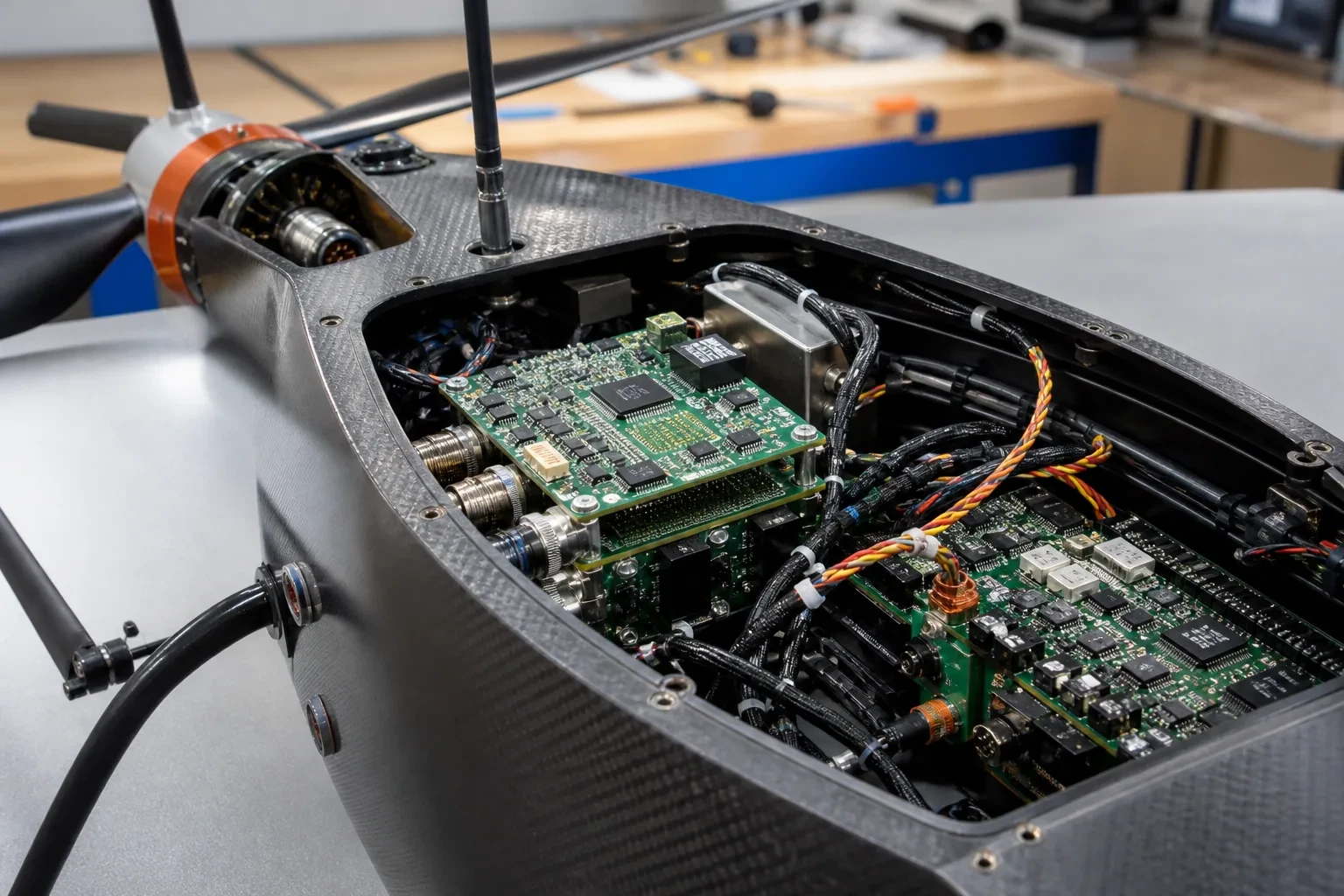
In short
Qualify PCB or PCBA suppliers for medical, aerospace and defense work by program requirements, site-specific quality evidence, materials, inspection and release records.
Do not treat three regulated markets as one specification
A medical instrument, a commercial drone and a defense system may all need reliable circuit boards, but their applicable standards, customers and qualification routes are not interchangeable. Start with the actual product, operating environment, contract and acceptance class. Ask the program owner to identify which requirements apply to the PCB, which apply to assembly and which apply to the finished device or system.
Map each requirement to a producing site and record
Ask where fabrication, assembly, coating, programming and testing will take place. Verify any ISO 13485, AS9100 or other quality-system claim against the current holder, site and scope before relying on it. A supplier working on one high-reliability program is not automatically qualified for another. Likewise, IPC workmanship criteria should be specified for the product rather than inferred from marketing language.
For the proposed build, identify the approved material and stackup, critical dimensions, component controls, inspection methods, test limits and lot or serial traceability. Ask what records will accompany the sample and repeat builds, how long they will be retained and how a customer can retrieve them.
Use a pilot build to test the evidence path
Before placing a production award, submit one controlled revision and agree the review gates. The pilot should expose unresolved stackup, component, soldering, cleaning or test questions while changes are still manageable. Compare the returned records with the purchase requirements: were deviations identified, approvals captured and the final configuration clear?
For aerospace or defense applications, also determine whether export, data-handling or customer-approval restrictions affect the proposed production route. Those requirements belong to the specific contract and jurisdiction; this page does not claim that PCBArise holds a blanket authorization for regulated programs.
Review the separate medical PCB and aerospace and UAV PCB pages for application questions, then use quality control to define the inspection and test evidence needed for your design.
FAQ
Common questions
Does one certificate cover medical, aerospace and defense PCB work?+
No. Each program has its own applicable standards, customer requirements and production scope. Verify the certificate, site and process for the actual order.
What should a high-reliability PCB pilot demonstrate?+
It should test manufacturability and the agreed evidence path: material and revision control, inspection, test results, deviations, approvals and traceability.
What should a medical, aerospace or defense buyer check first?+
Start with the program's applicable requirements and the exact producing site. Compare the requested material, process, traceability, inspection and test records with that site's current scope, then obtain the customer or program owner's approval path before a build is awarded.
Technical references
Sources used for this guide
These sources explain the standards, materials or process details discussed above. Check the current revision when applying them to a new design.